要旨
改質活性炭繊維フェルト (modified ACF felt) is an advanced filtration material developed to improve adsorption performance, contaminant removal, and service life in industrial applications. Compared with conventional activated carbon fiber felt, surface modification enhances its ability to target specific pollutants and perform under more demanding operating conditions.
Widely used in VOC removal, air purification, water treatment, and other filtration applications, modified activated carbon fiber felt provides a reliable solution for industries seeking higher efficiency and longer-lasting filter media. This article explores its key benefits, applications, performance characteristics, and selection considerations for buyers.
1. Understanding Modified Activated Carbon Fiber Felt: Composition & Technical Principles
1.1 How Modification Enhances the Structure of Modified Activated Carbon Fiber Felt
Standard activated carbon fiber felt achieves its adsorption performance through a highly developed microporous structure formed during the activation process of precursor fibers, such as polyacrylonitrile (PAN), viscose rayon, or pitch-based carbon. However, conventional ACF felt has limitations when dealing with specific contaminants or more demanding operating environments.
Modification technologies further optimize the surface chemistry, pore structure, and functional properties of 改質活性炭繊維フェルト, allowing manufacturers to develop filter media with improved selectivity, adsorption efficiency, and application flexibility.
The three main modification methods used in commercial production include:
- Oxidative modification — This method uses treatments such as nitric acid, hydrogen peroxide, or ozone to introduce oxygen-containing functional groups, including carboxyl, hydroxyl, and carbonyl groups, onto the fiber surface. The increased surface polarity improves adsorption performance for heavy metal ions, ammonia, and acidic gases, making modified activated carbon fiber felt suitable for specialized purification applications.
- Impregnation and loading — Active substances such as potassium permanganate, silver, copper oxide, and phosphoric acid can be introduced into the fiber matrix to enhance targeted contaminant removal. For example, silver-loaded modified activated carbon fiber felt provides additional antimicrobial properties for applications in water treatment and pharmaceutical air filtration.
- Heteroatom doping — Nitrogen or sulfur doping during thermal treatment modifies the electronic structure of carbon layers, improving interactions between the carbon surface and specific molecules. This approach can enhance adsorption performance for aromatic VOCs and certain heavy metal pollutants.
Each modification method changes key material characteristics, including functional group concentration, pore size distribution, and surface polarity. These improvements enable 改質活性炭繊維フェルト to deliver measurable performance advantages in industrial filtration systems rather than only providing minor improvements over standard materials.
1.2 Key Performance Properties vs. Standard Activated Carbon Fiber Felt
The quantitative performance gap between standard and modified ACF felt is substantial across multiple procurement-critical parameters:
| パラメータ | Standard ACF Felt | Modified ACF Felt |
|---|---|---|
| BET比表面積(m²/g) | 800 – 1,200 | 1,200 – 2,500 |
| Micropore Volume (cm³/g) | 0.35 – 0.55 | 0.55 – 0.90 |
| Adsorption Rate (relative) | ベースライン | 1.5× – 3× faster |
| Tensile Strength (N/cm) | 15 – 25 | 18 – 30 |
| pH Tolerance Range | 4 – 10 | 2 – 13 |
| Operating Temperature Range | Up to 120°C | Up to 180°C (modification-dependent) |
The expanded BET surface area directly correlates with adsorption capacity per unit mass, enabling thinner filter assemblies or extended replacement intervals. Wider pH tolerance is especially critical in chemical processing environments where media contacts acidic or alkaline process streams.
2. Industrial Filtration Applications & Proven Use Cases
2.1 Core Applications of Modified Activated Carbon Fiber Felt
The advanced adsorption performance and customizable surface properties of 改質活性炭繊維フェルト allow it to be used across a wider range of industrial filtration applications compared with standard activated carbon fiber felt. By adjusting surface chemistry and loading different functional materials, modified ACF felt can be tailored for specific contaminants and operating environments.
The major industrial applications include:
- VOC recovery and solvent adsorption — Modified activated carbon fiber felt with oxidative or nitrogen-doped treatments provides enhanced adsorption capacity and faster breakthrough response for toluene, xylene, acetone, and other organic solvent vapors. It is widely applied in paint manufacturing, printing, chemical processing, and exhaust treatment systems where efficient adsorption-desorption cycles are required for solvent recovery.
- Air purification and gas-phase contaminant removal — Impregnated modified activated carbon fiber felt using materials such as potassium permanganate (KMnO₄) or activated alumina can improve removal efficiency for hydrogen sulfide, formaldehyde, ozone, and other harmful gases. These properties make it suitable for HVAC systems, cleanrooms, and industrial air purification equipment where conventional activated carbon fiber felt may not provide sufficient selective adsorption performance.
- Water and liquid-phase treatment — Surface-modified activated carbon fiber felt improves adsorption of heavy metal ions, including Pb²⁺, Cd²⁺, and Hg²⁺, through enhanced surface functional groups and ion-exchange capabilities. Compared with unmodified carbon fiber materials, it provides better potential for removing specific pollutants and pharmaceutical contaminants in advanced water treatment applications.
- Electromagnetic interference (EMI) shielding applications — The combination of carbon-based electrical conductivity and flexible felt structure enables modified activated carbon fiber felt to be used as a lightweight EMI shielding substrate in electronics manufacturing. Customized modification can help control electrical resistance and meet different application requirements.
2.2 Sector-Specific Applications of Modified Activated Carbon Fiber Felt
Different industries require filtration materials with specific adsorption targets, durability, and compliance performance. Modified activated carbon fiber felt provides customized solutions for demanding industrial environments.
Chemical processing and manufacturing — Chemical plants often operate under strict emission control requirements, including EPA 40 CFR Part 63 and the EU Industrial Emissions Directive. Modified activated carbon fiber felt cartridges used in continuous adsorption systems provide stable performance under changing temperature and humidity conditions, helping improve VOC control efficiency and operational reliability.
Electronics manufacturing and semiconductor cleanrooms — Semiconductor production requires extremely low levels of airborne molecular contamination (AMC). Modified activated carbon fiber felt with targeted impregnation can capture specific ionic or organic contaminants more effectively than general-purpose filter media, reducing contamination risks that may affect product quality and manufacturing yield.
Pharmaceutical and healthcare environments — Pharmaceutical facilities require reliable filtration solutions that support strict air quality control. Modified activated carbon fiber felt with antimicrobial treatments, such as silver or zinc oxide loading, can support odor control, VOC removal, and microbial management while helping simplify filtration system design and validation processes.
3. Compliance Standards & Quality Specifications for Procurement
3.1 Relevant Industry Standards and Documentation Requirements
When selecting a modified activated carbon fiber felt supplier, B2B buyers should evaluate not only product performance but also manufacturing consistency, safety documentation, and quality control capabilities.
Important standards and documents may include:
ISO 9001:2015 — Demonstrates the supplier’s quality management system and manufacturing process control capability.
REACH and RoHS compliance — Particularly important for modified activated carbon fiber felt containing metal-based impregnation materials, ensuring compliance with restricted substance requirements in international markets.
GB/T 17393 — A Chinese standard related to activated carbon fiber product classification and testing methods, applicable for suppliers manufacturing in China.
UL 900 and EN 1822 — Relevant references for filter materials used in HVAC and air filtration applications where fire safety and filtration efficiency classifications are required.
For technical evaluation, buyers should also request supplier test reports covering key performance indicators, including BET surface area, pore structure analysis, ash content, and adsorption performance data. These parameters help verify whether the modified activated carbon fiber felt matches the requirements of the intended application.
3.2 Critical Specification Checklist for B2B Buyers
Before purchasing modified activated carbon fiber felt, buyers should confirm the following specifications based on their filtration system requirements:
- Thickness tolerance — Standard tolerance is typically around ±10%, while precision filtration assemblies may require tighter control, such as ±5%.
- Fiber diameter — Common fiber diameters range from 7–20 μm. Finer fibers can provide higher surface area, while larger diameters may offer improved mechanical strength.
- Ash content — Lower ash content is preferred for high-purity applications, especially in pharmaceutical and sensitive industrial environments.
- Moisture resistance — Moisture performance should be evaluated because humidity can affect adsorption capacity during storage and operation.
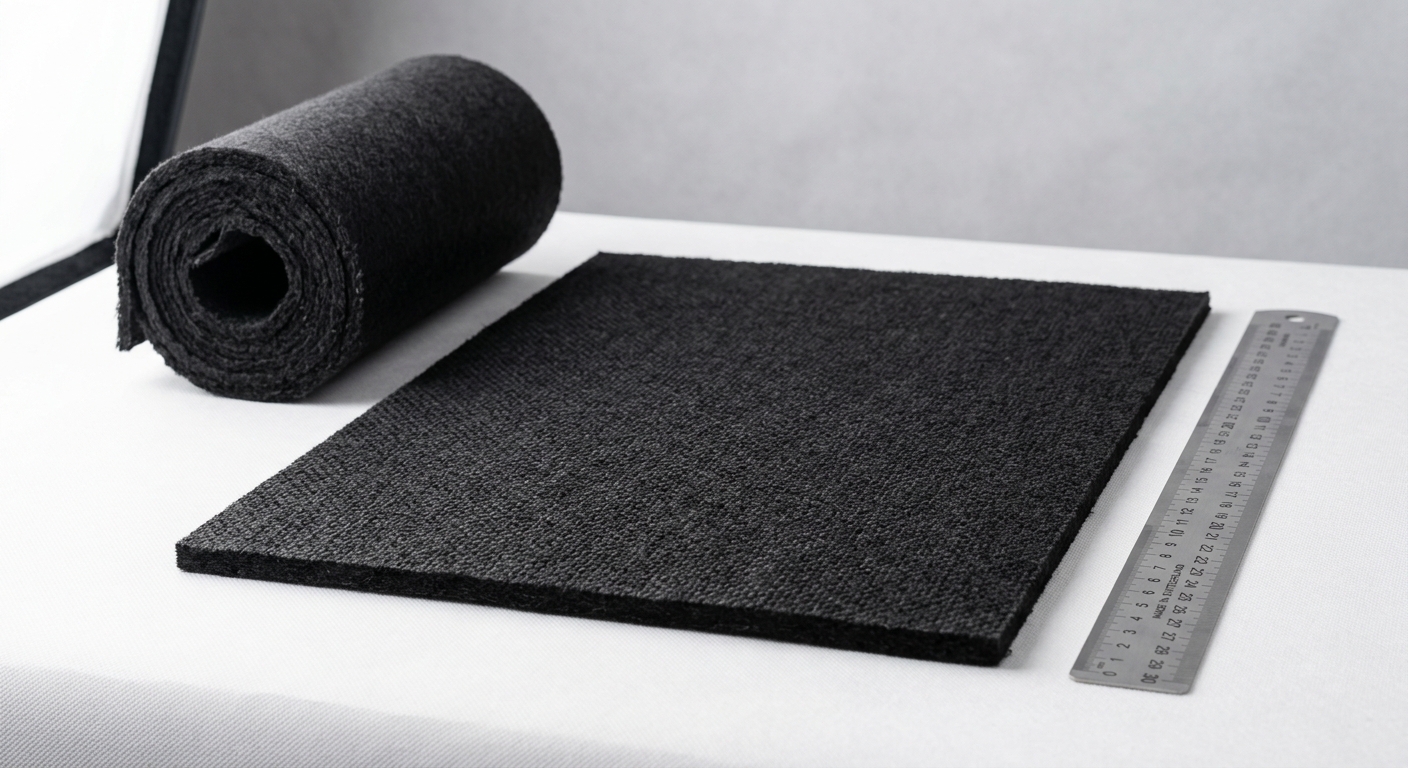
- Available formats — Confirm whether the supplier provides rolls, sheets, or customized die-cut shapes according to customer drawings and OEM requirements.
- Modification consistency — Buyers should verify modification uniformity through appropriate testing methods to ensure stable adsorption performance across the entire filter material.
4. Commercial Value & ROI of Modified Activated Carbon Fiber Felt
4.1 Total Cost of Ownership vs. Alternative Filter Media
The initial purchase cost per kilogram of 改質活性炭繊維フェルト is generally higher than granular activated carbon (GAC) and conventional activated carbon filter materials. However, for medium- and high-duty-cycle filtration systems, evaluating total cost of ownership (TCO) often provides a more accurate picture of long-term value.
The main cost advantages of modified activated carbon fiber felt include:
- Regeneration capability — Compared with many disposable adsorption materials, modified activated carbon fiber felt can support repeated regeneration under suitable operating conditions, including steam or hot nitrogen regeneration. This capability helps reduce replacement frequency and material consumption in continuous filtration applications.
- Higher adsorption efficiency per unit volume — The unique fiber structure of modified activated carbon fiber felt provides a shorter diffusion path and faster adsorption response compared with traditional granular media. This allows filtration systems to achieve required performance with more compact designs, potentially reducing equipment size, pressure loss, and operating energy consumption.
- Extended service intervals — Through customized surface modification and improved contaminant selectivity, modified activated carbon fiber felt can achieve longer service life in specific VOC removal and gas purification applications compared with standard activated carbon fiber felt. Longer replacement cycles help reduce maintenance requirements and operating interruptions.
- Lower secondary waste generation — The lightweight felt structure produces less spent filter material volume compared with some granular alternatives while maintaining efficient contaminant removal performance. This can simplify waste handling and disposal processes.
For industrial systems operating continuously throughout the year, the lifecycle benefits of 改質活性炭繊維フェルト often become more important than the initial material price. A complete TCO evaluation should consider replacement frequency, energy consumption, maintenance requirements, and waste disposal costs.
4.2 Supply Chain and Customization Considerations for Modified Activated Carbon Fiber Felt
When selecting a modified activated carbon fiber felt supplier, buyers should evaluate not only product specifications but also customization capability, technical support, and supply reliability.
Key factors to consider include:
- MOQ flexibility — Different modification methods may require customized production processes. Suppliers that provide small trial quantities for application testing can help buyers reduce qualification risks before full-scale purchasing.
- Lead time management — Standard modified activated carbon fiber felt grades usually have shorter production cycles, while customized impregnation or special modification solutions may require additional development time. Buyers should confirm production schedules before project implementation.
- Technical support — Experienced suppliers should be able to recommend suitable modification types, felt thickness, density, and formats based on contaminant characteristics, operating temperature, humidity conditions, and filtration system requirements.
- OEM and conversion capability — Suppliers with the ability to provide finished components, including pleated, rolled, or die-cut filter elements, can help customers simplify assembly processes and improve production efficiency.
Choosing the right modified activated carbon fiber felt supplier ensures not only consistent material performance but also better long-term value throughout the product lifecycle.
FAQ
Q1: What specific modifications are available, and how do I select the right type? Selection depends on target contaminant chemistry. Oxidative modification suits ionic contaminants and polar gases. Impregnation with specific reagents targets defined compounds (e.g., KMnO₄ for H₂S, silver for microbial control). Nitrogen doping optimizes aromatic VOC removal. Share your contaminant list and concentration range with the supplier’s technical team for a data-backed recommendation.
Q2: How does modified ACF felt perform under high-humidity or high-temperature conditions? Modified grades with hydrophobic surface treatments maintain >85% of dry-condition adsorption capacity at 80–90% relative humidity. Thermally stabilized modifications support continuous service to 150–180°C. Always specify your worst-case operating conditions during procurement to ensure the modification profile is matched accordingly.
Q3: Can modified ACF felt be regenerated on-site, and what is its typical service cycle? Yes. Steam regeneration at 110–130°C for 30–60 minutes is the standard on-site method. Hot inert gas (nitrogen) regeneration is preferred for moisture-sensitive applications. Typical service cycles range from 2,000 to 8,000 hours depending on contaminant loading, with modified grades retaining >90% initial capacity after 200+ regeneration cycles under controlled conditions.
結論
Modified activated carbon fiber felt delivers a measurable and documented performance advantage over standard ACF felt and conventional granular or non-woven filter media across the parameters that matter most to industrial buyers: adsorption capacity, operating range, service life, and total cost of ownership. The ability to engineer surface chemistry for specific contaminant targets—combined with regeneration capability and compact filter geometry—makes modified ACF felt the technically justified choice for VOC recovery, air purification, water treatment, and cleanroom applications operating under regulatory pressure.
For procurement teams, the path to value realization lies in precise specification: matching the modification type to contaminant chemistry, verifying compliance documentation, and qualifying suppliers on technical support depth and customization capability. When these criteria are met, modified ACF felt consistently delivers lower lifecycle cost and more reliable process performance than the alternatives it replaces.