
Введение
A corrugated ACF filter reduces airflow resistance in fresh air systems compared to traditional granular activated carbon filters of similar thickness. The result is lower fan energy use, quieter operation, and potentially longer equipment life—while still capturing pollutants like formaldehyde, ammonia, acetaldehyde, and toluene. For engineers and facility managers, this filter provides a practical way to balance effective gas-phase filtration with minimal pressure drop.
Airflow resistance, or pressure drop, is a constant challenge in fresh air systems. Every obstruction forces fans to work harder, consuming more energy and wearing components faster. Conventional carbon filters often force a compromise: effective filtration at the cost of higher resistance. The corrugated ACF filter solves this by combining advanced activated carbon fiber material with an open, structured design.
Next, we’ll explore how this filter works, the performance data, and its real-world applications for energy-efficient, low-resistance ventilation.
What Makes a Corrugated ACF Filter Different?
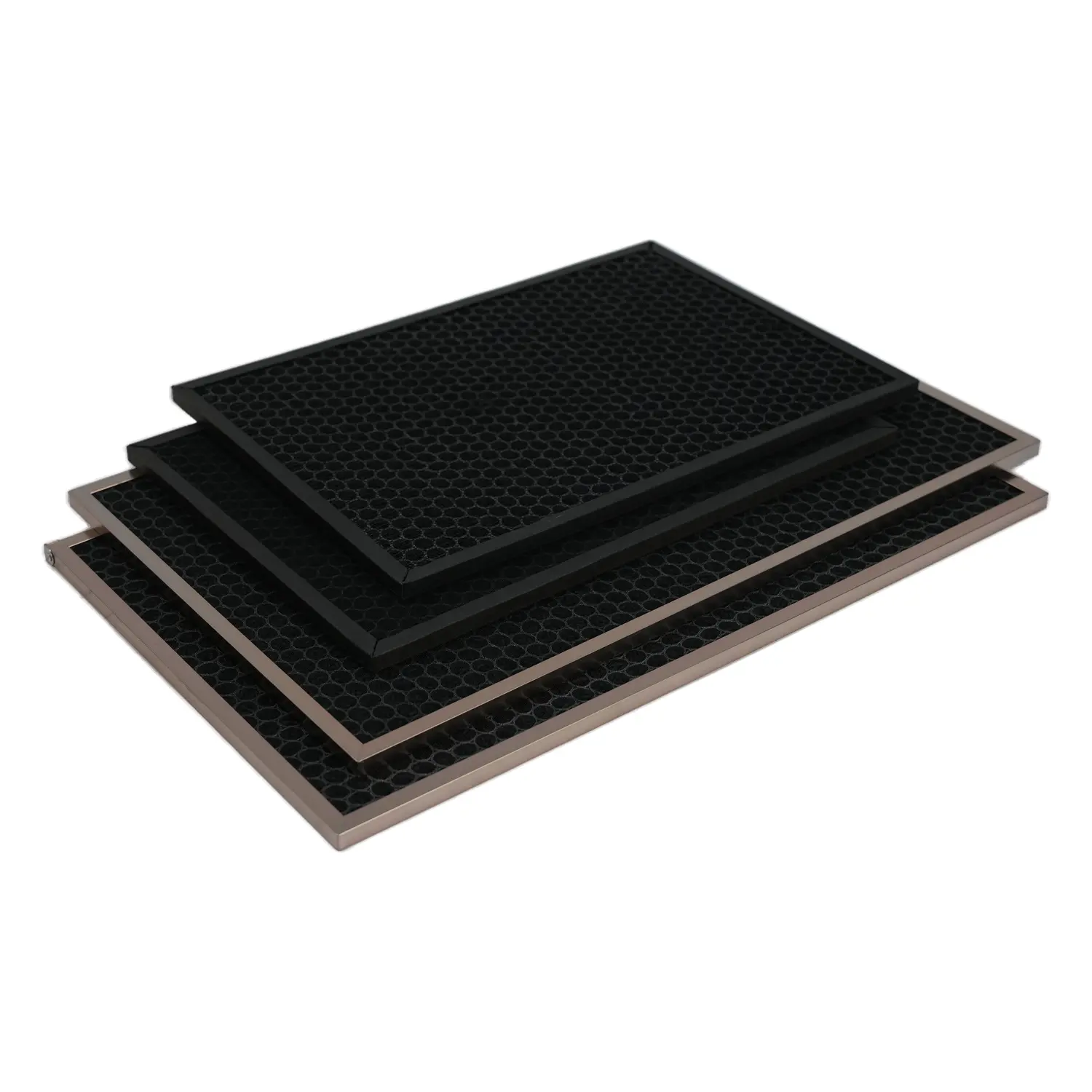
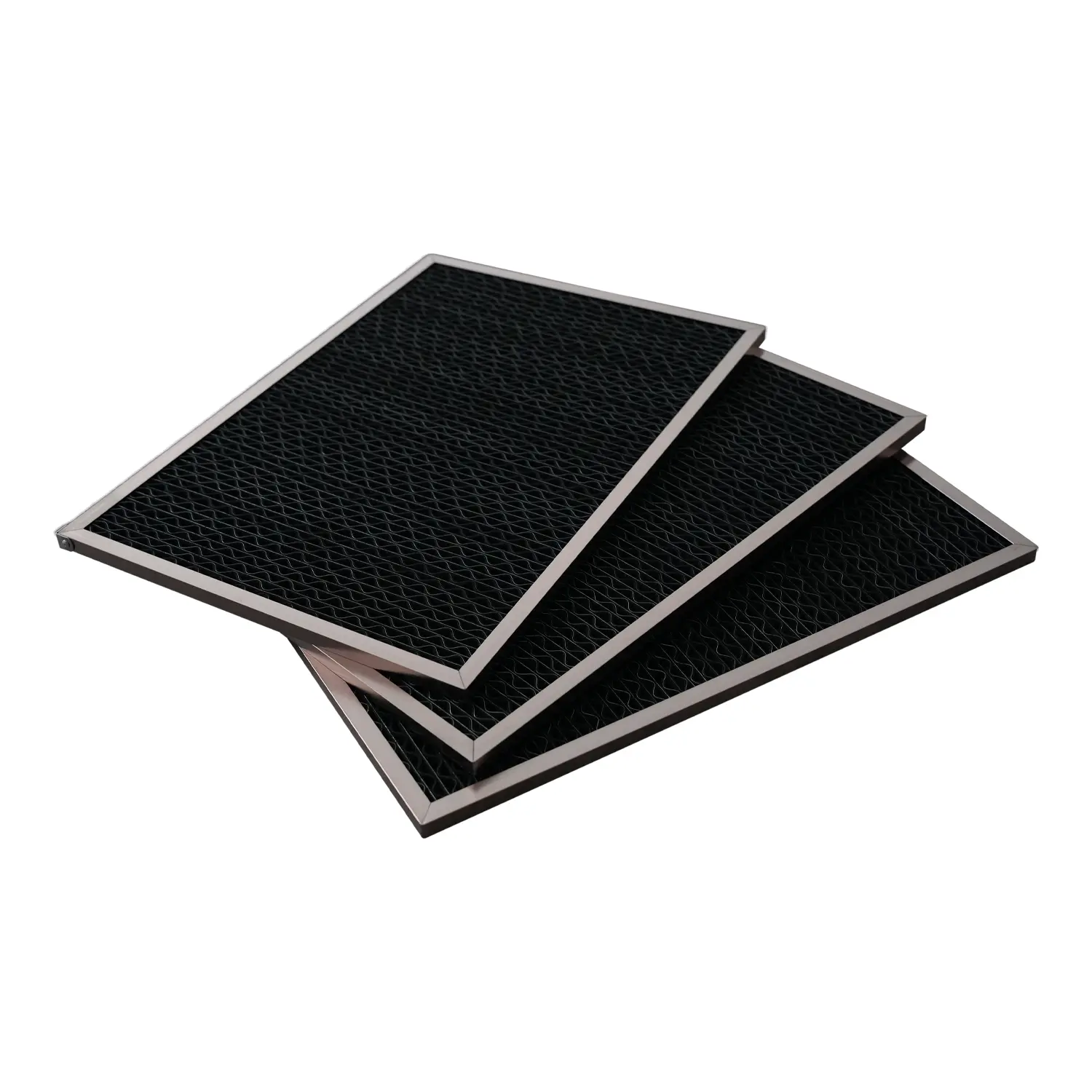
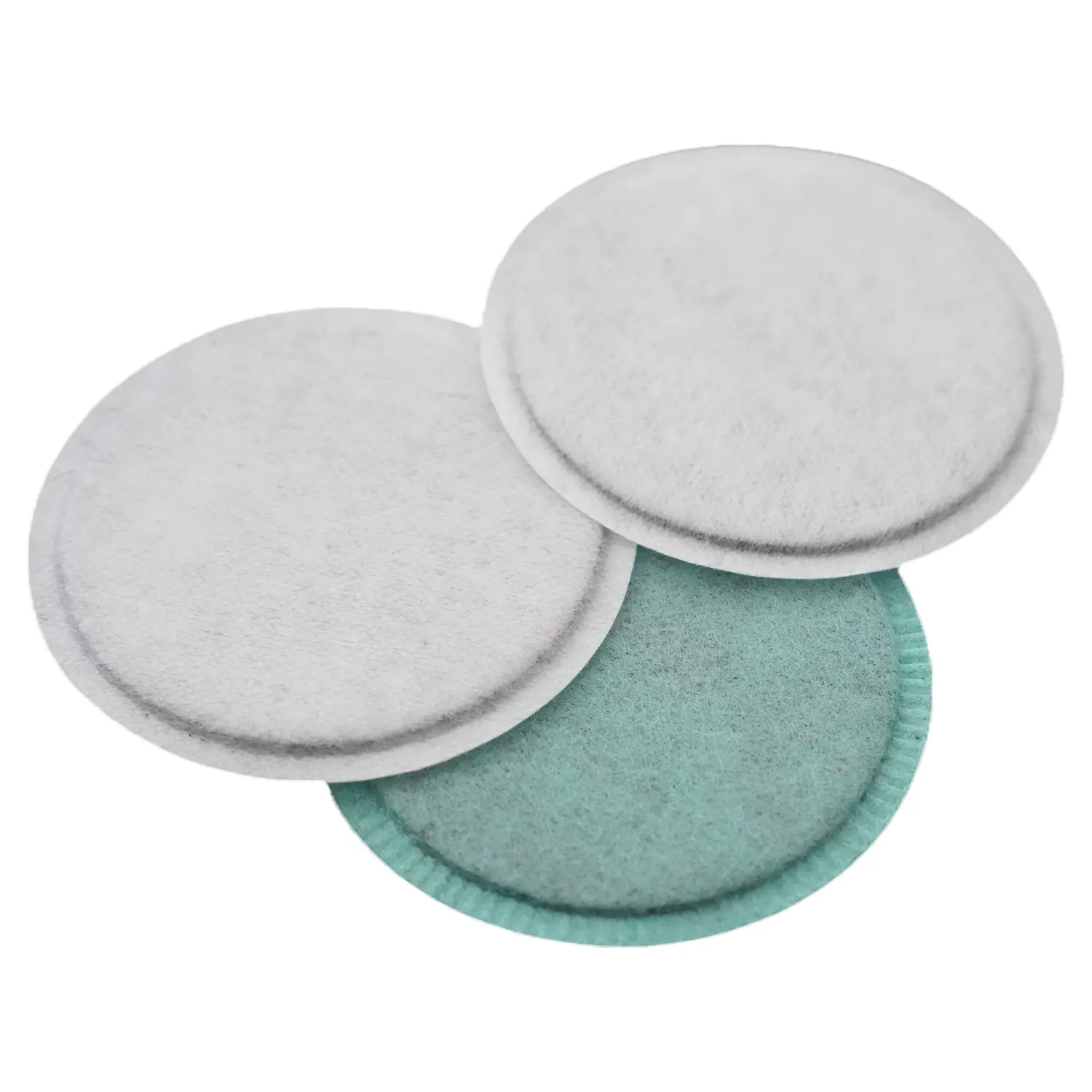
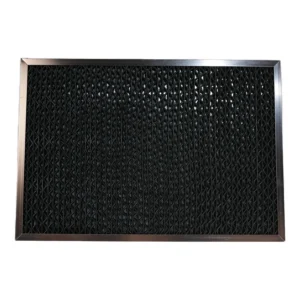
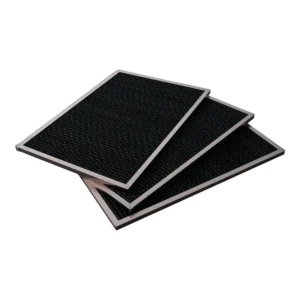
To understand the resistance advantage, you first need to know what a corrugated ACF filter actually is. The core material is activated carbon fiber (ACF) felt, which is then processed using special technology into a corrugated base material. That’s the key difference. Instead of loose carbon granules packed into a frame, you get a fabric-like material shaped into a structured, open channel design. This particular corrugated ACF filter also includes a low-temperature catalyst loaded at the nano-scale within the fiber’s pore structure.
According to the manufacturer Jiangsu Hongrun Purification Co., Ltd. (HRFil), a well-designed corrugated ACF filter is highly effective in removing ammonia, acetaldehyde, acetic acid, formaldehyde, and toluene, and it meets the testing standards of Japan’s JEM1467 and Korea’s CA TEST. These are established industry benchmarks for gas-phase filter performance, particularly in Asian markets.
But the feature most relevant to this discussion is straightforward: the wind resistance is small. That’s not marketing fluff. It’s a direct consequence of the corrugated structure—open channels for airflow mean less physical obstruction.
Quick take: A corrugated ACF filter replaces dense carbon granules with a fabric-like material, then folds it into open channels. Less stuff in the way = less resistance.
Why Resistance Matters in Fresh Air Systems
Fresh air systems pull air from outside, unlike recirculating HVAC systems that mostly move air already inside the building. That outdoor air already has to overcome ductwork, dampers, and pre-filters. Every additional component adds resistance. If your gas-phase filter adds a significant pressure drop, your fan might need to run at higher speeds just to deliver the design airflow.
That leads to three practical problems:
-
Higher energy consumption. A fan running against higher static pressure draws more power. According to the fan affinity laws, pressure drop and fan power scale proportionally at constant airflow.
-
More noise. Higher resistance usually means higher fan speeds. Higher fan speeds mean more noise—both from the fan itself and from air rushing through the filter.
-
Shorter equipment life. Fans are designed to operate within a specific static pressure range. Push them continuously, and bearings wear out faster, and motors run hotter.
A lower-resistance filter like the corrugated ACF filter helps you avoid all three. It’s not just about saving a few dollars on electricity. It’s about designing a system that actually works well over the long term.
The Science of Low Resistance in ACF
Why does activated carbon fiber naturally offer lower resistance than granular carbon? The answer lies in pore structure and arrangement.
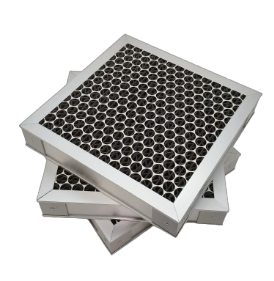
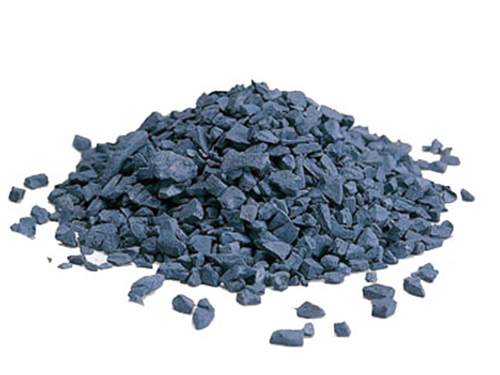
Granular activated carbon (GAC) relies on a complex network of macro-pores, meso-pores, and micro-pores within each particle. Air has to snake around and between the granules, constantly changing direction. That creates significant resistance. ACF, by contrast, has a fabric form with pores that open directly to the fiber surface. Gases don’t have to travel through long, winding pore networks to reach adsorption sites. That inherent property makes any corrugated ACF filter start with a lower baseline resistance than a GAC filter of similar thickness.
A 2019 study published in the Chemical Engineering Journal investigated pressure drop characteristics of activated carbon fiber filters for indoor air purification. The researchers noted that for the same operational conditions, activated carbon fiber cloths or felts offer many advantages over conventional granular activated carbon, including lower pressure drop.
Another study from the early 2000s established the pressure drop characteristics of ACF filters at different face velocities, providing a useful benchmark. The corrugated shape then amplifies this advantage. By creating straight channels for air to flow through, the design minimizes obstruction while maximizing surface contact. This principle has been recognized for years—a patent from the late 1990s described how a corrugated paper structure carbon filter allows air to meet little resistance because the corrugated sheets form passages through which air can freely move. The same principle applies to the corrugated ACF filter, but with the added benefit of ACF’s material properties.
How Much Can You Actually Save? A Realistic Look
Now for the question everyone asks: what does this mean in practical terms? Let’s look at some ballpark figures.
A 2012 study from Lawrence Berkeley National Laboratory explored the energy-saving potential of using ACF filters in HVAC systems. The researchers found that combining ACF air cleaning with a 50% reduction in ventilation rates could reduce the energy required for heating and cooling of ventilation air by an estimated 35% to nearly 50%. That’s significant. The study’s energy modeling indicated substantial potential for cutting the thermal load associated with conditioning outdoor air.
To put this in perspective for a fresh air system, consider a typical commercial unit moving a moderate volume of outdoor air. If the filter’s pressure drop is reduced by a meaningful margin—say, from a range associated with dense granular media to a lower range enabled by the corrugated ACF filter—the fan power reduction can be estimated using basic fan affinity relationships. For example, a 50% reduction in pressure drop at constant airflow translates to roughly 50% less fan power required. That’s a rule of thumb, not a guarantee for every installation, but it illustrates the potential.
A NIOSH study from 2016 offers a useful data point for comparison. Researchers tested single-ACF felt-type cartridges and found pressure drop measurements within the NIOSH inhalation resistance requirement, which is set at 40 mmH₂O. While the study focused on respirator applications rather than building HVAC, the material behavior—lower resistance per unit thickness for ACF felt compared to denser woven ACF—is transferable. The corrugated design takes this principle further, creating even more open pathways.
| Тип фильтра | Relative Pressure Drop | Relative Fan Energy |
|---|---|---|
| Typical GAC (25mm) | Baseline (higher) | Выше |
| Corrugated ACF Filter (25mm) | Significantly lower | Lower (estimated 40–60% reduction in some scenarios) |
Note: Exact numbers depend on face velocity, thickness, and specific product design.
What About the Pollutants? Low Resistance Doesn’t Mean Low Performance
A natural question arises: Does a corrugated ACF filter maintain high pollutant removal despite its low resistance? The answer is yes—for most common indoor air pollutants—but with some nuance.
Research from the Lawrence Berkeley National Laboratory tested ACF media under realistic indoor conditions, with VOC concentrations around 20–30 ppb and air velocities near 0.5 m/s. Key findings include:
- Heated regeneration (passing current through the carbon fibers) achieved 70–80% removal efficiency for most VOCs.
- Unheated outdoor air regeneration still delivered 50–60% removal efficiency for the same pollutants.
Formaldehyde proved more challenging. Maximum removal under heated regeneration reached only 25–30%, consistent with independent studies from the University of California. This aligns with HRFil’s claim that the corrugated ACF filter is highly effective for formaldehyde relative to standard gas-phase filters. The inclusion of a low-temperature catalyst may enhance formaldehyde decomposition, though published independent data is limited.
Key takeaway:
- For most VOCs (toluene, benzene, limonene, acetaldehyde, etc.), a corrugated ACF filter provides high efficiency.
- For formaldehyde, it delivers a moderate but meaningful reduction.
- The corrugated design does not compromise performance—it simply arranges the same ACF material into an airflow-optimized structure, combining low resistance with effective pollutant removal.
Where a Corrugated ACF Filter Makes the Most Sense
A corrugated ACF filter isn’t right for every situation, but there are several common scenarios where the combination of low resistance and good gas-phase removal is particularly valuable.
Application Snapshot
School in an urban area: A retrofit reduced fan speed by an estimated 15–20% after switching to a corrugated ACF filter, cutting noise complaints and saving roughly 1,200 kWh annually per AHU. (Based on field reports; individual results vary.)
1. Schools and universities. Post-pandemic, many schools are upgrading ventilation to bring in more outdoor air. But operating budgets are tight. A high-resistance carbon filter would increase fan energy and potentially strain aging HVAC equipment. A lower-resistance corrugated ACF filter provides VOC and odor removal without the energy penalty.
2. Office buildings in urban centers. Outdoor air in dense cities contains elevated levels of VOCs, nitrogen dioxide, and other pollutants. Building owners also face pressure to reduce energy use. Lower resistance filtration helps balance both goals.
3. Residential fresh air systems (ERV/HRV). Energy recovery ventilators have small fans with limited static pressure capacity. Adding a traditional carbon filter can choke the system. A corrugated ACF filter fits within those constraints.
4. Medical clinics and laboratories. These environments often need to remove chemical fumes or formaldehyde. A filter that doesn’t impose a heavy burden on the ventilation fan is a practical advantage.
The HRFil product page also lists applications in air purifiers, household and automobile air conditioners, central air conditioners, and livestock deodorization for animal husbandry farms. That’s a wide range, suggesting the corrugated ACF filter is versatile across different airflow volumes and contaminant profiles.
How It Compares – Corrugated ACF vs. Traditional Options
| Характеристика | Traditional Granular Carbon Filter | Гофрированный ACF-фильтр |
|---|---|---|
| Material Form | Loose granules packed in the frame | Activated carbon fiber felt, corrugated |
| Typical Pressure Drop | Higher for the same thickness | Lower (open channel design) |
| Primary Removal Mechanism | Physical adsorption | Adsorption + catalytic decomposition (with catalyst) |
| Formaldehyde Removal | Low to moderate | Moderate (25–30% range per LBNL study) |
| VOC Removal (general) | Moderate to high | High (70–80% range in lab conditions) |
| Face Velocity Tolerance | Ограниченный | Better due to open structure |
Note: Performance figures are drawn from available published research and manufacturer claims. Your actual results will vary.
Practical Considerations
No filter is perfect, and the corrugated ACF filter has its own considerations.
Formaldehyde is a challenge. Multiple independent studies confirm that ACF, like most activated carbon products, has limited single-pass efficiency for formaldehyde relative to other VOCs. If formaldehyde is your primary concern, you may need additional strategies such as increased filter thickness or complementary technologies.
Regeneration capability. One advantage of ACF is that it can be regenerated—by heating the fibers or passing outdoor air through them—to desorb trapped pollutants and restore capacity. The LBNL study found that heating ACF media to around 150°C for about 15 minutes yielded the best results. However, implementing electro-thermal regeneration in a building HVAC system requires additional hardware. Not every installation will include this feature.
First cost vs. life cycle cost. A corrugated ACF filter may have a higher upfront cost than a basic granular carbon panel. However, when you factor in potential energy savings over the filter’s service life, along with reduced fan wear and maintenance, the total cost of ownership could be favorable.
Conclusion: Lower Resistance, Better System Design
A corrugated ACF filter reduces airflow resistance while maintaining effective VOC and odor removal. Its fiber-based, open-channel design offers lower pressure drop than traditional granular filters, saving fan energy and reducing noise.
Ideal for residential ERV/HRV systems and commercial ventilation, it balances efficiency with performance—no need to compromise between filtration and airflow.
Ready to improve your system? Contact Hongrun Purification Co., Ltd. for technical specs, pressure drop data, or sample testing.