
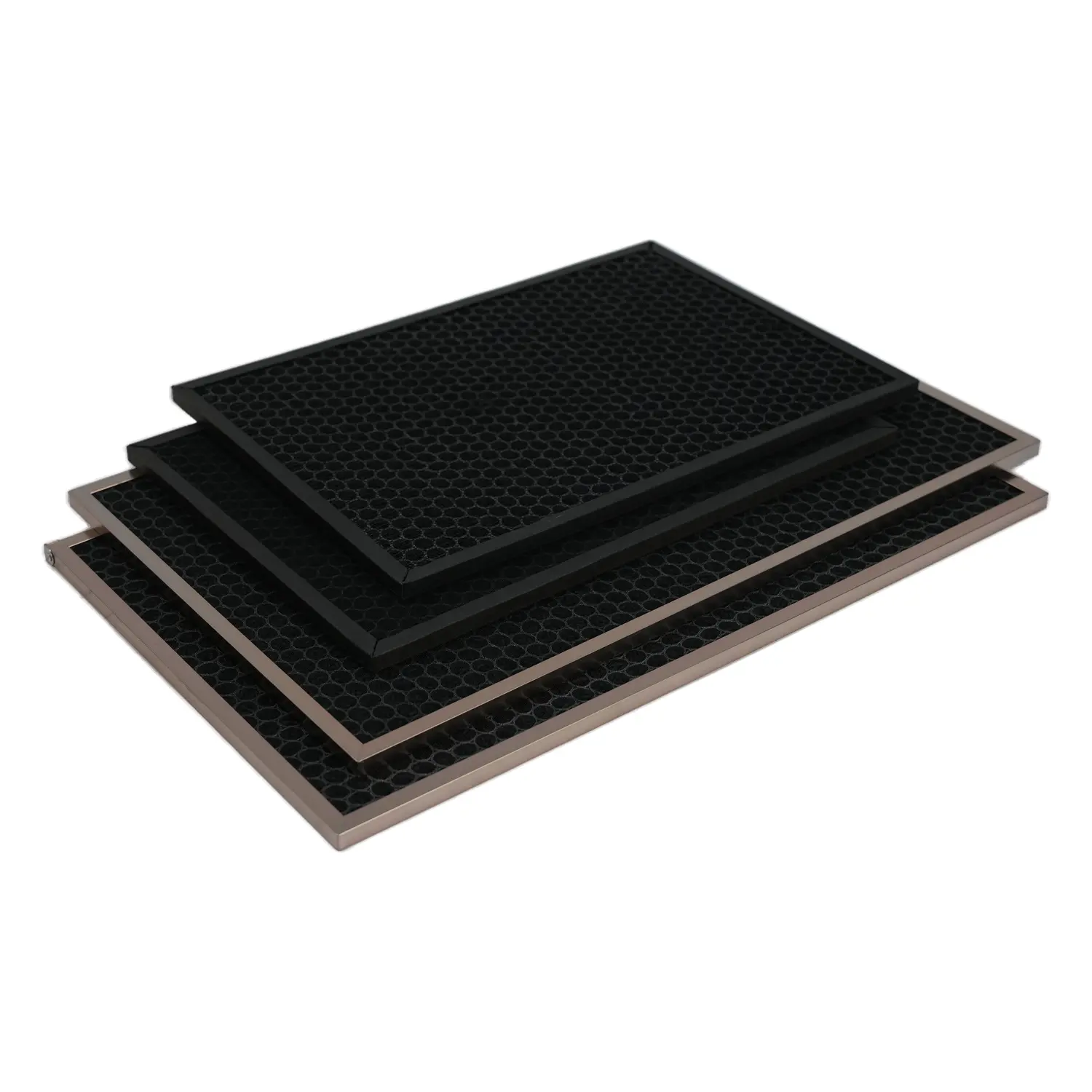
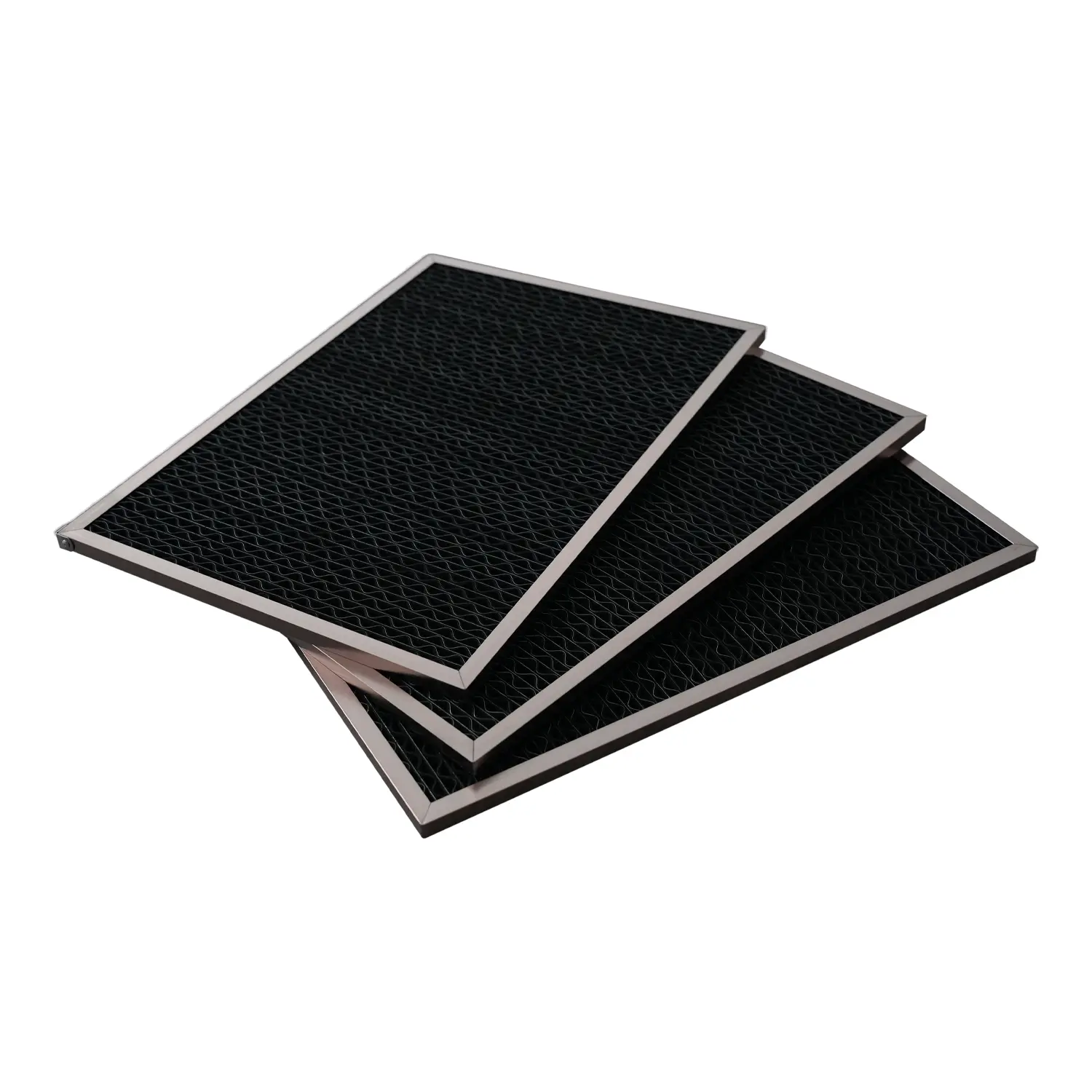
In the filtration industry, materials are often judged not by how they look, but by how consistently they perform under real operating conditions. Whether in automotive air conditioning systems, fresh air ventilation units, industrial deodorization equipment, or agricultural odor control installations, the effectiveness of a filter depends heavily on the integrity of its core materials. Among these, carbon-based filtration media play a critical role in removing odors, harmful gases, and volatile organic compounds from the air.
As filtration requirements become more demanding and system designs more refined, traditional adhesive-based carbon fabrics are increasingly showing their limitations. Adhesives, once considered a convenient solution for fixing activated carbon in place, introduce a series of compromises that affect adsorption efficiency, airflow resistance, processing stability, and long-term reliability. In response to these challenges, glue-free carbon fabric has emerged as a more advanced and cleaner alternative—one that aligns closely with the needs of clean and stable composite manufacturing.
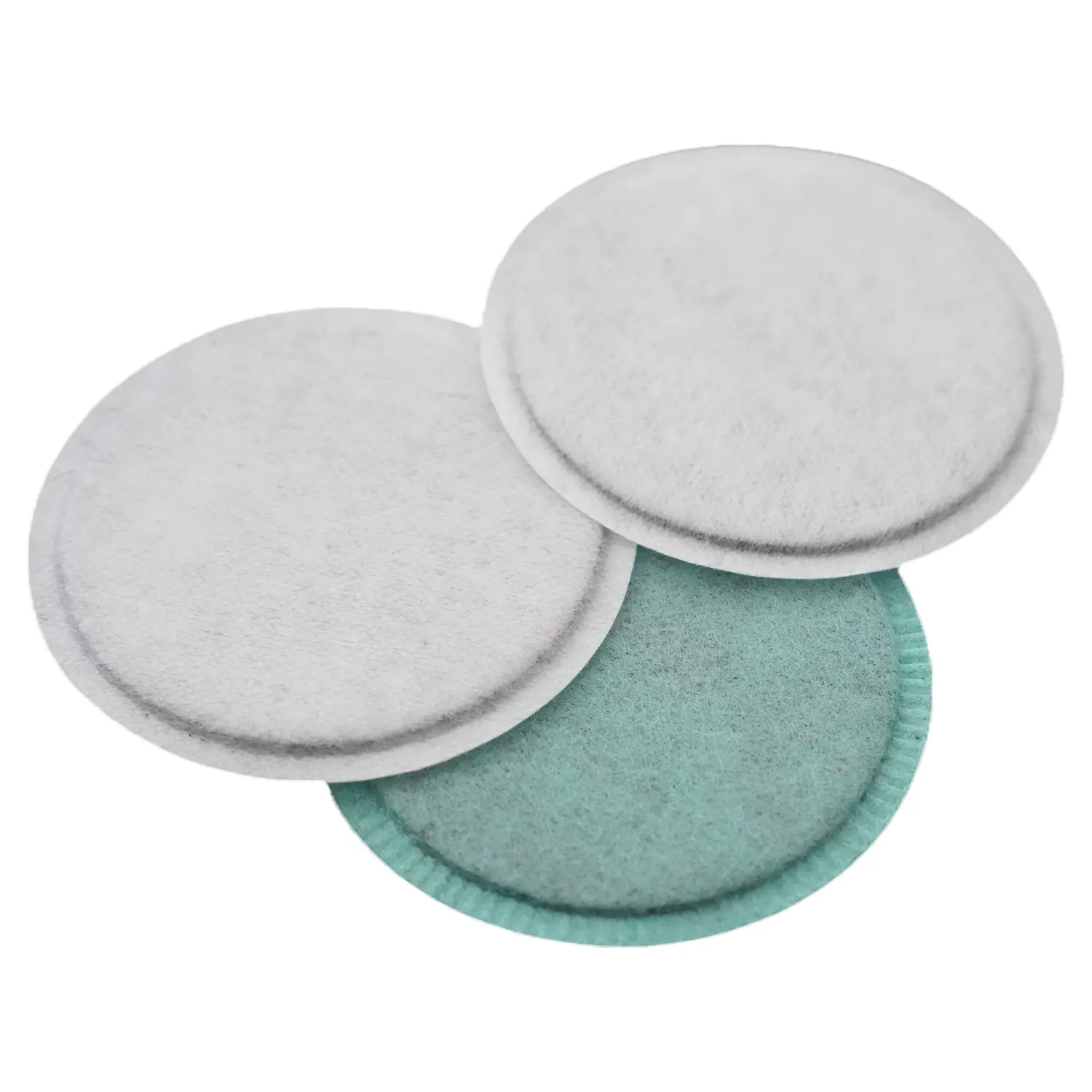
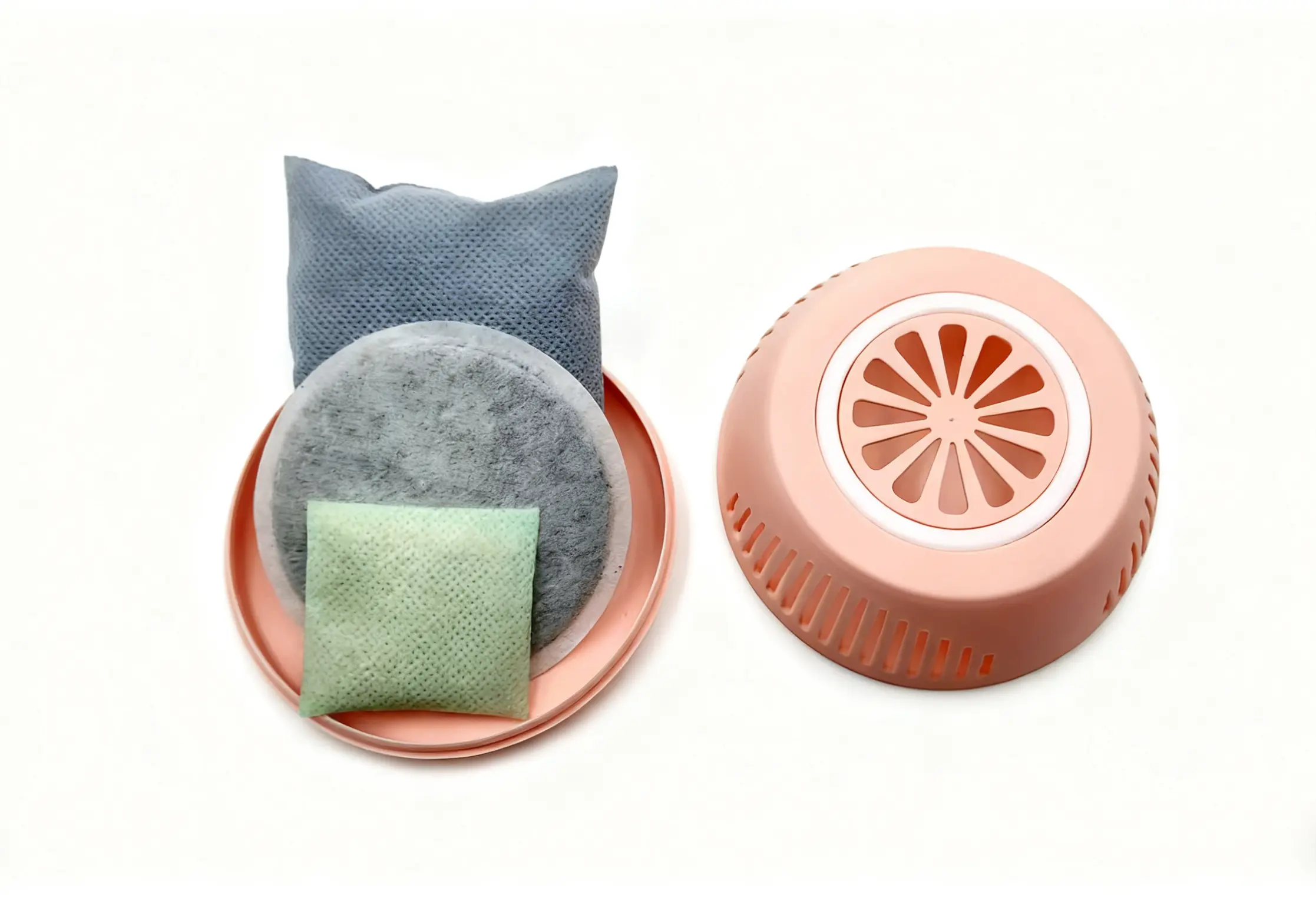
Glue-free carbon fabric is engineered without any adhesive bonding layer. Instead of relying on glue to attach activated carbon to a carrier structure, the material design ensures that the adsorption medium remains securely integrated while preserving its natural porosity and functionality. This structural choice fundamentally reshapes how the fabric performs, how it is processed, and how it contributes to the overall effectiveness of filtration systems.
Rethinking Carbon Fabric Construction in Filtration Manufacturing
To comprehend the value of glue-free carbon fabric, it is essential to discuss the purpose of conventional carbon fabric with regard to the adhesive. In many traditional products, glue is employed to attach activated carbon powder to a textile or nonwoven material substrate. This method provides a temporary solution to the problem, but it often prevents the micropores in the carbon from being blocked, which diminishes the area available for adsorption. Over time, adhesives may also become harder, degrade, or interact with chemical substances in the air, which will further diminish their performance.
Conversely, carbon fabric that is glue-free is intended to function without an adhesive coating. This implies that the activated carbon can still have the ability to retain its original capacity to adsorb. Airflow can pass through the fabric with less difficulty, while molecules with an odor and gaseous toxins have unfettered access to the carbon’s porous structure.
From a manufacturing perspective, removing adhesive compounds also eliminates a significant source of variation. The thickness of the glue application, the conditions of the curing process, and the behavior of aging can all differ between batches, which introduces variability into the finished filters. Glue-free construction eliminates these inefficiencies, providing a more consistent and controllable material for the manufacturing of composite filtration.
Core Performance Characteristics ofGlue-Freee Carbon Fabric
The performance advantages of glue-free carbon fabric are not theoretical concepts; they translate directly into measurable improvements during both production and real-world use. These characteristics are especially important in applications where filters must operate continuously, often under fluctuating airflow and environmental conditions.
Key Material Characteristics
-
No adhesive content
The absence of glue ensures a cleaner material composition, eliminating the risk of adhesive-related contamination, odor release, or performance degradation over time. -
Complete retention of activated carbon adsorption performance
With no adhesive blocking the pores, the activated carbon maintains its full adsorption capacity, enabling efficient removal of odors, gases, and chemical pollutants. -
Low ventilation resistance
Optimized airflow pathways reduce pressure drop, supporting energy-efficient system operation in ventilation and air conditioning equipment. -
High filtration efficiency
The combination of open carbon structure and stable fabric form contributes to consistent filtration results across the service life of the filter. -
Excellent foldability and formability
The fabric can be easily folded, pleated, or shaped without cracking, delamination, or loss of structural integrity.
These features make glue-free carbon fabric particularly suitable for composite filter designs that require both adsorption efficiency and mechanical stability.
Performance and Manufacturing Value Comparison
| Aspect | Glue-Free Carbon Fabric | Adhesive-Based Carbon Fabric |
|---|---|---|
| Carbon adsorption utilization | Fully retained | Partially blocked by glue |
| Airflow resistance | Low and stable | Often higher and inconsistent |
| Material purity | No adhesive-related emissions | Potential glue odor or aging |
| Forming and folding | Smooth and predictable | Risk of cracking or delamination |
| Long-term stability | High | Performance may degrade |
| Manufacturing consistency | Strong batch-to-batch control | Sensitive to glue variables |
This comparison highlights why glue-free carbon fabric is increasingly favored in applications that demand reliability and long service life.
Clean Manufacturing as a Material-Driven Process
In composite filtration manufacturing, cleanliness is not only a function of the production environment—it is deeply influenced by material selection. Glue-free carbon fabric contributes to clean manufacturing in several important ways.
First, the absence of adhesive eliminates the release of volatile compounds that can occur during cutting, heating, or prolonged storage. This is particularly important for filters used in indoor environments, automotive cabins, or air purifiers, where even minor material odors can be unacceptable.
Second, glue-free construction reduces dust generation and surface contamination during processing. Adhesives can attract particles or create uneven surfaces that interfere with precise assembly. Glue-free carbon fabric, by contrast, maintains a more uniform surface structure, supporting accurate placement and secure integration within composite filter assemblies.
Finally, clean manufacturing also means predictable behavior during automation. In high-volume filter production lines, materials must feed smoothly, fold consistently, and maintain dimensional stability. Glue-free carbon fabric meets these requirements more reliably than adhesive-based alternatives.
Structural Stability in Composite Filter Design
Stability is crucial to the manufacturing of composite materials. Filters are typically composed of multiple layers that each have a specific purpose— mechanical processing, adsorption, structural support, or distribution of air. For the composite system to be successful, each layer must have its own properties that do not affect the others.
Glue-free carbon fabric is naturally part of these complex designs. Because there is no adhesive to soften, harden, or migrate, the carbon fabric is consistently dense and malleable. This stability promotes uniform airflow distribution across the filter’s surface, which is essential for maximizing the efficiency of the filter and preventing local saturation.
Additionally, the fabric’s porosity and ability to be folded and formed enable designers to create shaped or pleated filters that increase the effectiveness of their surface without negatively affecting the structure. This design freedom is particularly important in compact systems, such as the HVAC unit in cars, which have a limited space but high performance is needed.
Application Scope Across Filtration Industries
Glue-free carbon fabric is widely used in air filtration systems where odor control, gas adsorption, and airflow efficiency are essential. Its versatility allows it to be adapted to a broad range of operating environments.
Typical Applications
-
Chemical filtration elements
-
Automotive air conditioning filters
-
Residential and commercial air purifier filters
-
Fresh air system filtration media
-
Building ventilation system filters
-
Central air conditioning filtration units
-
Deodorizing filtration devices for animal husbandry farms
In animal husbandry environments, for example, filters are exposed to high concentrations of ammonia and organic odors. The full adsorption capability of activated carbon is critical in these conditions, making glue-free carbon fabric a particularly effective solution.
Processing Advantages During Filter Production
Beyond performance in use, glue-free carbon fabric offers tangible advantages during manufacturing and assembly. These benefits directly impact production efficiency, yield rates, and overall cost control.
Manufacturing Benefits
-
Clean cutting edges without adhesive buildup
-
Reduced tool maintenance and contamination
-
Stable folding and pleating behavior
-
Lower rejection rates due to material defects
Because the fabric does not rely on adhesive bonding, it responds more predictably to mechanical processing. This predictability is especially valuable in automated production environments, where small material inconsistencies can lead to significant downtime or waste.
Long-Term Reliability and Service Life
Filters are often expected to perform consistently over extended periods, sometimes under variable temperature and humidity conditions. Adhesive-based carbon fabrics may experience a gradual performance decline as the glue ages, hardens, or reacts with environmental factors.
Glue-free carbon fabric avoids these risks by removing the adhesive layer entirely. As a result, adsorption efficiency remains more stable over time, and airflow resistance is less likely to increase unexpectedly. This long-term reliability is particularly important for systems that are difficult or costly to service, such as central HVAC installations or industrial ventilation networks.
Supporting Sustainable and Responsible Manufacturing
As sustainability becomes a central concern across industries, materials that simplify composition and reduce chemical content are gaining attention. Glue-free carbon fabric aligns well with this trend.
By eliminating adhesives, the material reduces the number of chemical components involved in filter production. This simplification can support easier material assessment, cleaner disposal processes, and, in some cases, improved recyclability of filter components. While activated carbon itself remains the primary functional element, removing glue contributes to a more transparent and responsible material profile.
Design Flexibility for Custom Filtration Solutions
Different filtration systems place different demands on materials. Some prioritize airflow, others emphasize odor removal, while still others must balance both within tight spatial constraints. Glue-free carbon fabric provides designers with the flexibility to tailor composite structures without being constrained by adhesive limitations.
The fabric can be combined with various nonwoven layers, structural supports, or protective meshes to create filters optimized for specific applications. Its stable behavior during forming ensures that design intent is accurately translated into finished products, reducing the gap between concept and real-world performance.
A Material Foundation for Modern Filtration Systems
As filtration technology continues to evolve, materials must keep pace with higher performance expectations and stricter quality standards. Glue-free carbon fabric represents a shift toward cleaner, more controlled, and more efficient material solutions.
By fully retaining activated carbon adsorption performance, minimizing airflow resistance, and supporting clean and stable composite manufacturing, this material addresses both technical and production challenges faced by modern filter manufacturers. It enables the creation of filtration products that are not only effective at removing pollutants but also reliable, durable, and consistent over time.
In applications where air quality, odor control, and system efficiency matter, glue-free carbon fabric is more than a material choice—it is a strategic foundation for high-performance filtration design and manufacturing.