
Abstract
Why are more filtration manufacturers switching to glue-free carbon fabric for high-performance adsorption applications?
Unlike conventional activated carbon textiles that rely on chemical binders, glue-free carbon fabric is engineered without adhesive layers that may interfere with adsorption efficiency or introduce unwanted emissions. This article explores how adhesive-free construction improves carbon pore accessibility, enhances airflow performance, and delivers greater structural stability across demanding filtration environments.
Designed for premium air purifier brands, HVAC manufacturers, and filtration engineers, this guide explores how eliminating chemical adhesives impacts indoor breathing environments. We compare glue-free carbon fabric with traditional bonded textiles to show why upgrading components is essential for meeting modern residential and commercial air quality standards.
How Glue-Free Carbon Fabric Improves Filtration Performance
The Hidden Link Between Filter Adhesives and Home Air Quality When considering home air quality, most people focus on dust and pollen, ignoring the very materials inside their air purifiers. Traditional carbon filters often use chemical glues to hold active charcoal particles. In a enclosed home environment, these binders can cause two major problems: they slow down odor elimination by clogging the carbon, and they can release faint, stale chemical smells over time. For modern families seeking true purity, glue-free carbon fabric offers a critical upgrade.
But what makes this material so effective on a manufacturing level? Let’s look at the science behind it.
Why Adhesive-Based Carbon Textiles Limit Adsorption Efficiency
Traditional activated carbon fabrics often rely on polyurethane, acrylic, or resin-based binders to secure carbon particles to textile substrates. While this manufacturing approach simplifies production, adhesive layers can partially block activated carbon micropores, reducing the available surface area required for effective VOC adsorption.
In many filtration applications, bonded carbon textiles may also introduce operational limitations under elevated humidity or fluctuating temperatures. Over time, adhesive degradation can affect structural consistency, airflow performance, and adsorption stability—particularly in systems exposed to continuous air circulation or variable environmental conditions.
For filtration manufacturers seeking predictable long-term performance, these limitations can affect system efficiency, maintenance intervals, and product lifecycle consistency.
Mechanical Bonding vs. Chemical Bonding: What Makes the Difference?
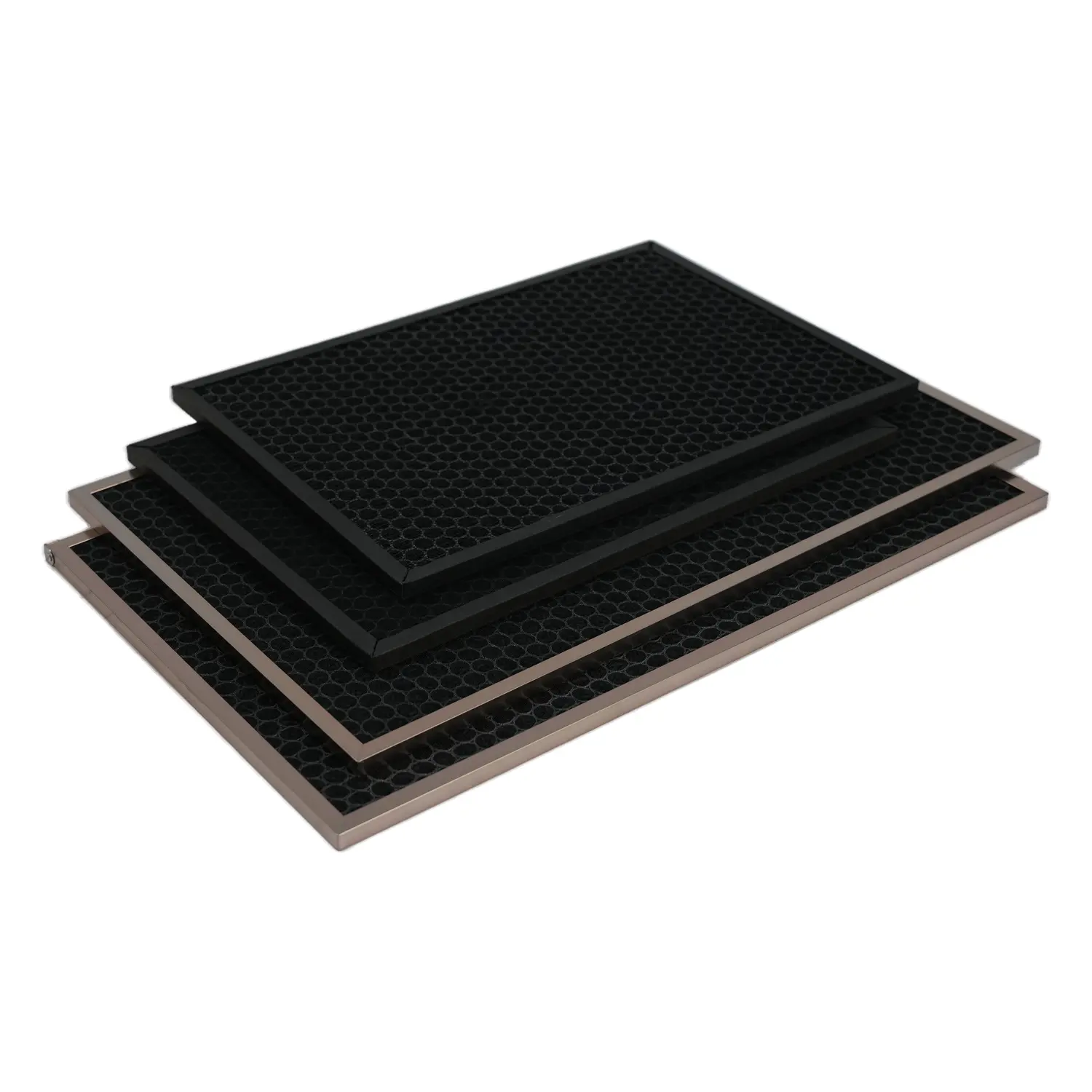
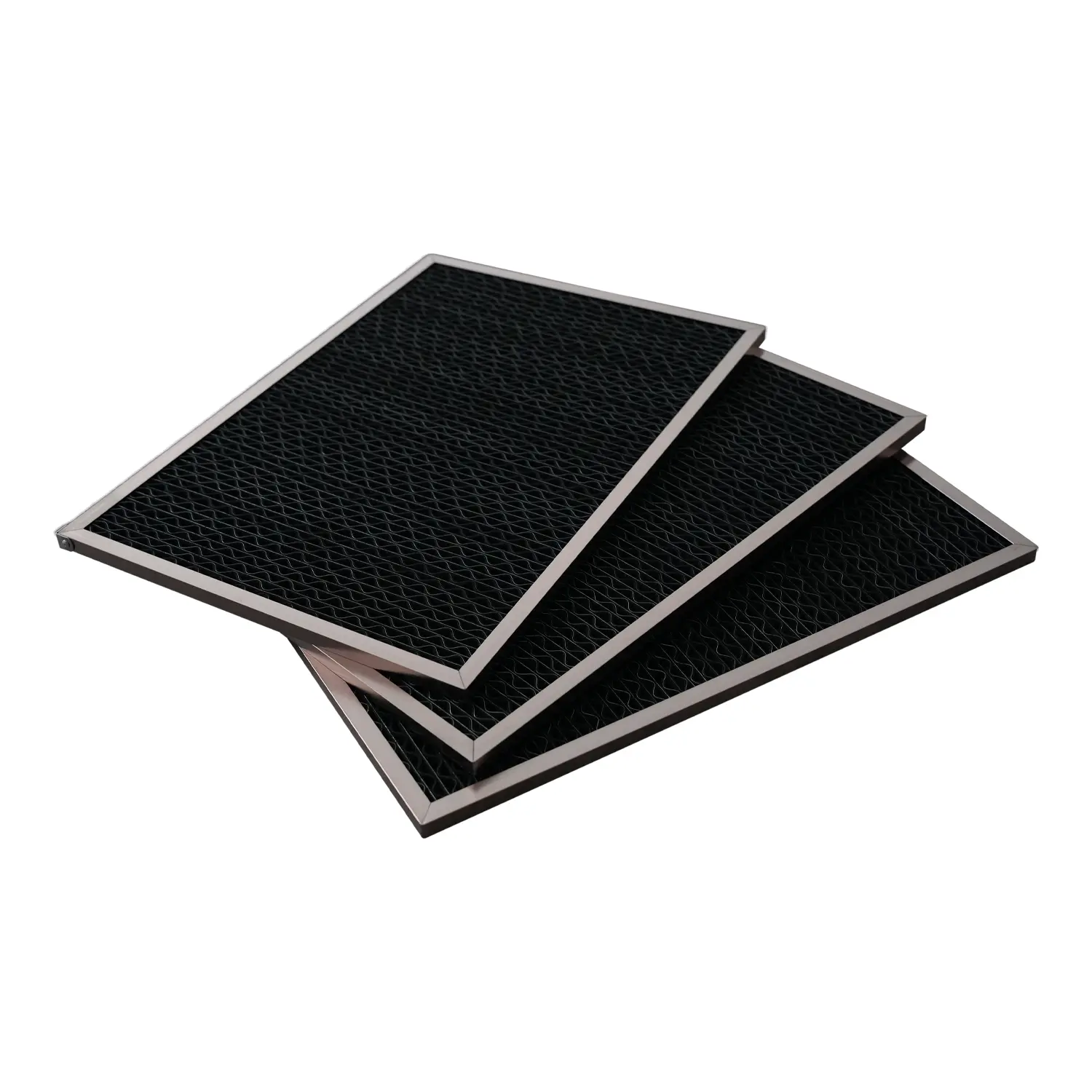
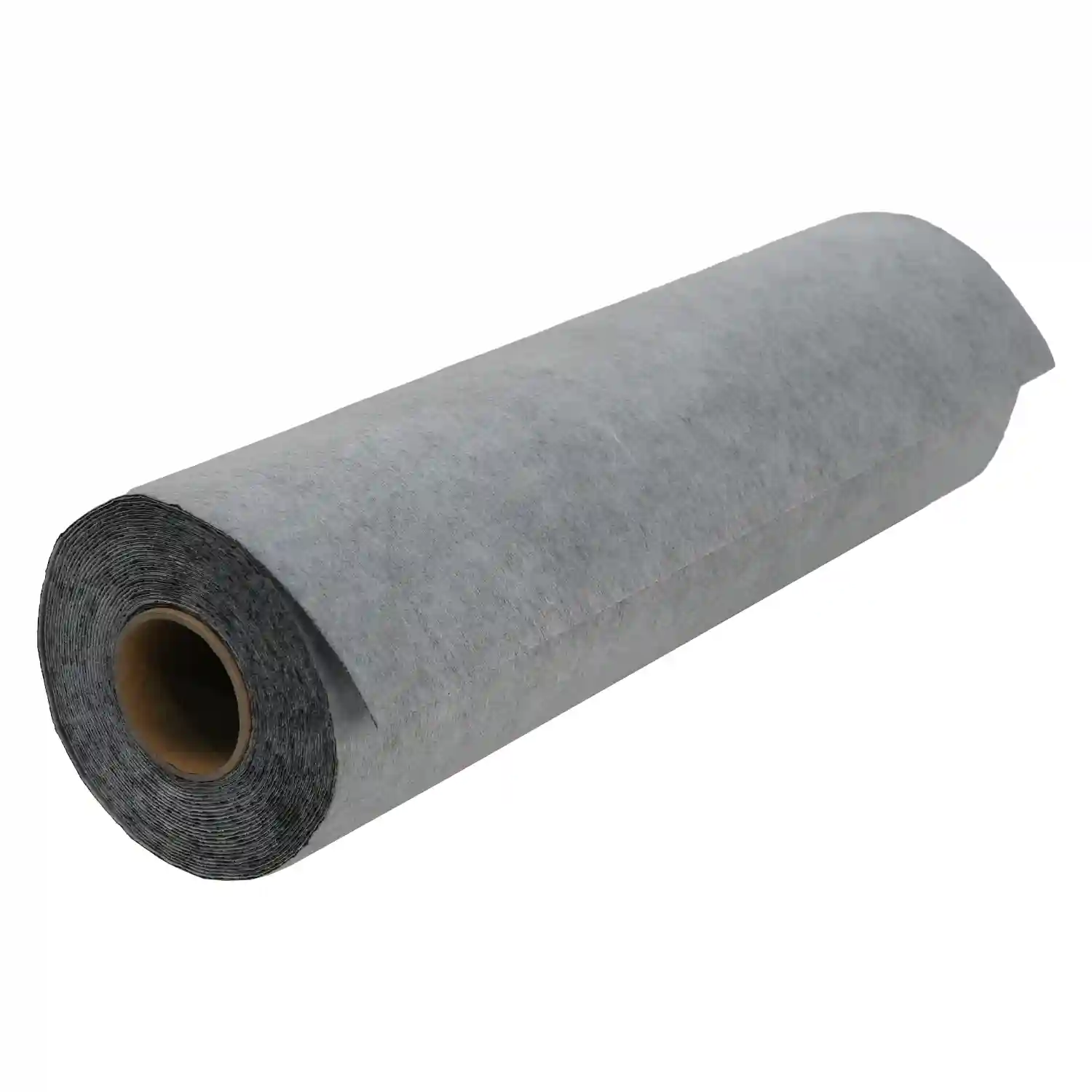
Glue-free carbon fabric eliminates chemical binders by using advanced mechanical bonding technologies such as thermal fusion, needle-punching, and integrated fiber structuring.
Thermal fusion uses controlled heat to create physical bonding between fibers and activated carbon layers without introducing foreign chemical compounds. This process helps preserve structural strength while maintaining carbon exposure for efficient adsorption.
Needle-punched construction mechanically entangles fibers to create a stable three-dimensional matrix. This structure typically supports higher airflow permeability compared with resin-saturated alternatives, making it particularly suitable for HVAC filtration systems, industrial ventilation units, and high-flow air purification modules.
Integrated fiber structuring offers the highest level of carbon accessibility by embedding activated carbon directly into the textile architecture. Because no adhesive layer obstructs micropores, the fabric generally provides greater adsorption utilization, lower pressure drop, and more stable long-term filtration performance.
The result is a filtration medium that combines high adsorption efficiency, excellent dimensional stability, and consistent operational reliability across a wide range of commercial and industrial air treatment applications.
Performance Comparison: Adsorption Efficiency and Material Durability
How Glue-Free Carbon Fabric Preserves Activated Carbon Performance
The adsorption performance of any activated carbon filtration medium depends largely on how much carbon surface area remains accessible during operation. In conventional bonded carbon textiles, adhesive layers may partially coat carbon particles or block microporous structures, limiting direct contact between contaminants and adsorption sites.
By eliminating resin-based binders, glue-free carbon fabric helps preserve a higher proportion of accessible activated carbon surface area. This allows pollutants to diffuse more efficiently into the carbon structure, improving capture performance across a broad range of VOCs and gaseous contaminants.
In practical filtration applications, this structural advantage typically results in:
- Faster initial adsorption response
- Higher contaminant capture efficiency
- More stable performance under continuous airflow
- Lower airflow resistance compared with heavily resin-coated alternatives
This improved pore accessibility is particularly important for removing low-molecular-weight compounds such as formaldehyde, benzene, and toluene, where efficient diffusion into microporous carbon structures directly affects overall filtration efficiency.
Compared with adhesive-bonded materials, mechanically structured carbon fabrics generally maintain more consistent pore distribution and adsorption activity over extended operating cycles. Because no chemical binder obstructs diffusion pathways, the activated carbon remains fully engaged throughout the filtration process.
Superior Durability Under Continuous Operating Conditions
Beyond adsorption efficiency, long-term material stability is a critical factor in filtration system design.
Glue-free carbon fabric offers greater structural consistency under fluctuating temperature, humidity, and airflow conditions because its bonding strength relies on physical fiber integration rather than organic adhesive stability.
This mechanical construction provides several long-term advantages:
Improved adsorption retention
Mechanically bonded structures typically demonstrate more stable contaminant retention during temperature variation, helping minimize desorption risk in systems exposed to changing environmental conditions.
Enhanced washability and reusability
In reusable filtration applications, physically bonded carbon layers are less susceptible to particle detachment or bond degradation during cleaning cycles. This helps preserve adsorption performance across repeated maintenance intervals.
Extended operational lifespan
Without adhesive oxidation, hydrolysis, or chemical aging, glue-free carbon fabrics generally maintain functional stability longer than conventional bonded alternatives, reducing replacement frequency and supporting lower lifecycle operating costs.
Why Material Stability Matters for Filtration Manufacturers
For HVAC manufacturers, industrial filtration system designers, and OEM air purification suppliers, adsorption consistency over time is just as important as initial capture efficiency.
A filtration medium that maintains pore accessibility, airflow stability, and structural integrity throughout its service cycle delivers measurable benefits, including:
- More predictable filtration performance
- Lower maintenance requirements
- Reduced pressure-drop variability
- Improved long-term system reliability
This combination of adsorption efficiency and mechanical durability makes glue-free carbon fabric a preferred material choice for advanced commercial and industrial air treatment applications.
Performance Metrics Comparison
| Parameter | Glue-Free Carbon Fabric | Adhesive-Bonded Carbon Fabric |
|---|---|---|
| VOC Adsorption Capacity (mg/g) | 450-580 | 320-450 |
| BET Surface Area (m²/g) | 950-1150 | 650-850 |
| Tensile Strength (N/5cm) | 12-18 | 15-22 |
| Off-Gassing Test Results (µg/m³) | < 5 | 15-45 |
| Formaldehyde Removal Efficiency (1hr) | 85-92% | 65-78% |
| Wash Cycle Durability | 30-50 cycles | 10-15 cycles |
| Service Life (months) | 18-36 | 12-24 |
| Compliance Certifications | OEKO-TEX Standard 100, GREENGUARD Gold | OEKO-TEX Standard 100 (limited) |
Application Scenarios for Commercial and Industrial Air Filtration
Integration with HVAC and Ventilation Filtration Systems
Glue-free carbon fabric is highly adaptable for commercial and industrial HVAC systems as a secondary or polishing filtration stage. Optimal placement is typically downstream of particulate filters to prevent premature saturation of adsorption sites and ensure consistent VOC removal. Its mechanically bonded structure generally offers lower airflow resistance than resin-saturated alternatives, helping maintain efficient circulation while minimizing pressure-drop impact on system performance.
In centralized air handling or forced-air systems, panels or modular inserts can be mounted in plenums, return air grilles, or dedicated filter frames. The material’s flexibility supports custom sizing for non-standard ducts or specialized equipment configurations, overcoming limitations of rigid cartridges. For split systems or process-specific units, fabric strips can be installed near evaporator coils or localized airflow paths to target concentrated gaseous contaminants effectively.
Maintenance intervals depend on environmental VOC load and system use. Facilities with high-emission processes may require more frequent replacement, while low-pollutant environments can extend operational cycles. Because saturation occurs before visible signs appear, implementing a scheduled replacement plan ensures reliable, predictable performance in commercial applications.
High-Performance Applications Requiring Stable VOC Adsorption
Beyond integration in HVAC systems, glue-free carbon fabric excels in specialized industrial and commercial odor-control applications where operational reliability and chemical-free performance are essential. Mechanically bonded construction maintains structural integrity under repeated handling, cleaning, or airflow cycling.
Key use cases include:
- Industrial odor-control systems in manufacturing or production facilities
- Centralized air purification for offices, healthcare, and educational buildings
- Environmental control in clean rooms or controlled-process areas
- Reusable or serviceable filtration modules requiring consistent adsorption capacity
Because no adhesive obstructs micropores, glue-free carbon fabric ensures more predictable adsorption efficiency across diverse operating cycles, supporting both performance and compliance goals.
Commercial Value for OEM Manufacturers and Filtration Suppliers
Optimized Lifecycle Costs
While initial material costs for glue-free carbon fabric may be higher than conventional bonded alternatives, the long-term operational advantages frequently deliver a more favorable total cost profile. Benefits include:
- Extended effective service life
- Reduced replacement frequency
- Consistent airflow and pressure-drop stability
- Lower maintenance-related downtime
- Reliable adsorption performance throughout operational cycles
These factors contribute to measurable lifecycle cost savings, making glue-free carbon fabric an attractive choice for filtration system manufacturers and commercial project integrators.
Design Flexibility and Customization
For OEMs, the ability to tailor activated carbon media is critical. Glue-free carbon fabric supports customizable:
- Thickness and layer profiles
- Carbon loading densities
- Roll widths and panel dimensions
- Lamination or modular assembly formats
This versatility allows designers to optimize filtration efficiency and airflow characteristics for project-specific requirements without compromising structural integrity or adsorption performance.
Supporting Compliance and Market Differentiation
As commercial and industrial air quality standards continue to tighten, low-emission, adhesive-free filtration materials offer clear advantages. Glue-free carbon fabric eliminates secondary chemical sources, enabling easier validation for low-emission certifications and enhancing technical credibility.
Manufacturers and distributors benefit from stronger positioning in competitive markets, improved specification compliance, and enhanced appeal to environmentally conscious procurement teams. In regulated or performance-sensitive projects, specifying mechanically bonded carbon fabric reduces potential liability while reinforcing sustainable product claims and long-term system reliability.
FAQ
Does glue-free carbon fabric release any odor during initial use?
Glue-free carbon fabric produces minimal initial odor, typically dissipating within 24–48 hours after installation. Any detectable smell comes primarily from residual manufacturing oils or packaging materials rather than chemical adhesives. Mechanically bonded construction ensures no adhesive-related VOCs are released during early operation, providing a cleaner and safer environment for sensitive indoor spaces. In contrast, adhesive-bonded fabrics may emit noticeable chemical odors for 1–2 weeks as binders cure and solvents evaporate, potentially impacting indoor air quality and system performance.
Can glue-free carbon fabric be washed or cleaned without losing adsorption capacity?
Yes, mechanically bonded carbon fabric withstands multiple gentle cleaning cycles while maintaining high adsorption efficiency. Use cold to warm water (up to 30°C), mild detergent without bleach or fabric softeners, and air drying to avoid thermal damage. The carbon particles remain physically interlocked within the fiber matrix, unlike adhesive-bonded media, which can degrade and lose effectiveness after repeated water exposure. Note that washing removes only surface-adsorbed pollutants; saturated carbon cannot be fully regenerated by washing alone. For commercial and industrial applications, periodic replacement is recommended to ensure consistent VOC adsorption performance.
How does glue-free carbon fabric compare to HEPA filters for removing gaseous pollutants?
HEPA filters effectively capture particulate matter (≥0.3 µm) but provide minimal removal of gaseous contaminants, such as VOCs, formaldehyde, or odors. Glue-free carbon fabric targets molecular-level pollutants through adsorption, complementing HEPA filtration in multi-stage air treatment systems. In commercial HVAC or industrial ventilation setups, HEPA filters handle particles, while glue-free carbon layers manage chemical vapors and odors. Its adhesive-free design prevents introduction of secondary contaminants, ensuring reliable performance over the life of the system.
Conclusion
Glue-free carbon fabric closes a critical gap in industrial and commercial air purification by eliminating adhesive-related VOC sources while preserving high adsorption efficiency. Mechanically bonded construction delivers predictable performance, durability, and compatibility with HVAC and air treatment systems. Although initial material costs may be higher than conventional bonded alternatives, extended service life, lower maintenance requirements, and washability advantages provide measurable lifecycle cost benefits.
For OEMs, facility managers, and system integrators, glue-free carbon fabric offers strong differentiation in low-emission product design, supports regulatory compliance, and reduces potential liability related to chemical off-gassing. As air quality standards evolve, selecting mechanically bonded carbon media ensures reliable, chemical-free performance and positions systems for long-term operational efficiency and market competitiveness.