
Abstract
Corrugated ACF Filters represent an advanced deodorizing solution for commercial and industrial HVAC applications. This comprehensive guide explores the structural advantages of corrugated ACF technology, its superior adsorption mechanisms compared to traditional granular carbon filters, and critical specifications for procurement managers seeking effective odor elimination in ventilation systems across healthcare, food processing, and commercial building environments. By leveraging engineered honeycomb geometries and ultra-fine carbon fibers, Corrugated ACF Filters deliver exceptional surface area efficiency, low-pressure drop characteristics, and rapid adsorption kinetics that address the most challenging indoor air quality demands in B2B contexts.
What is Corrugated ACF Filter Technology?
Structural Design and Material Composition
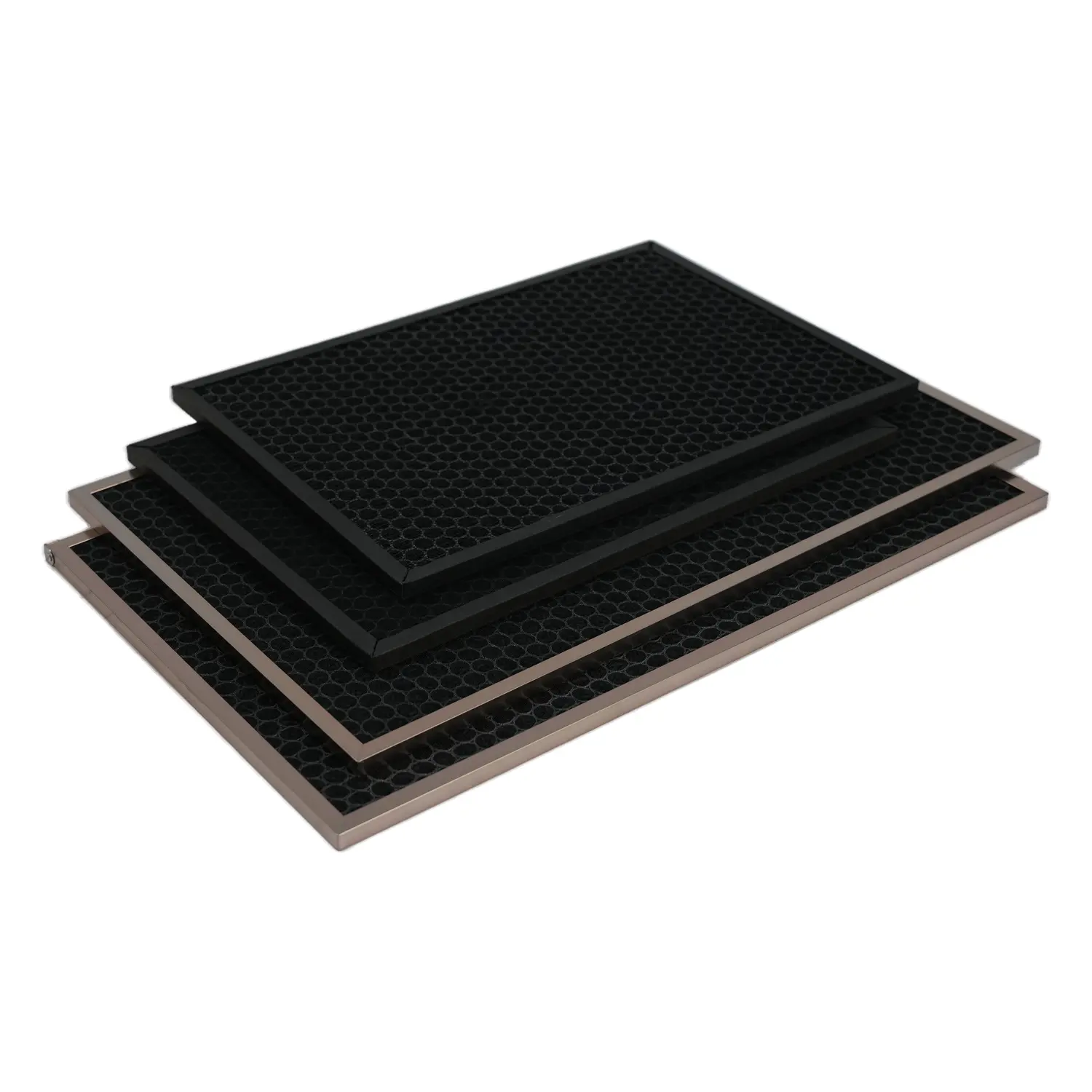
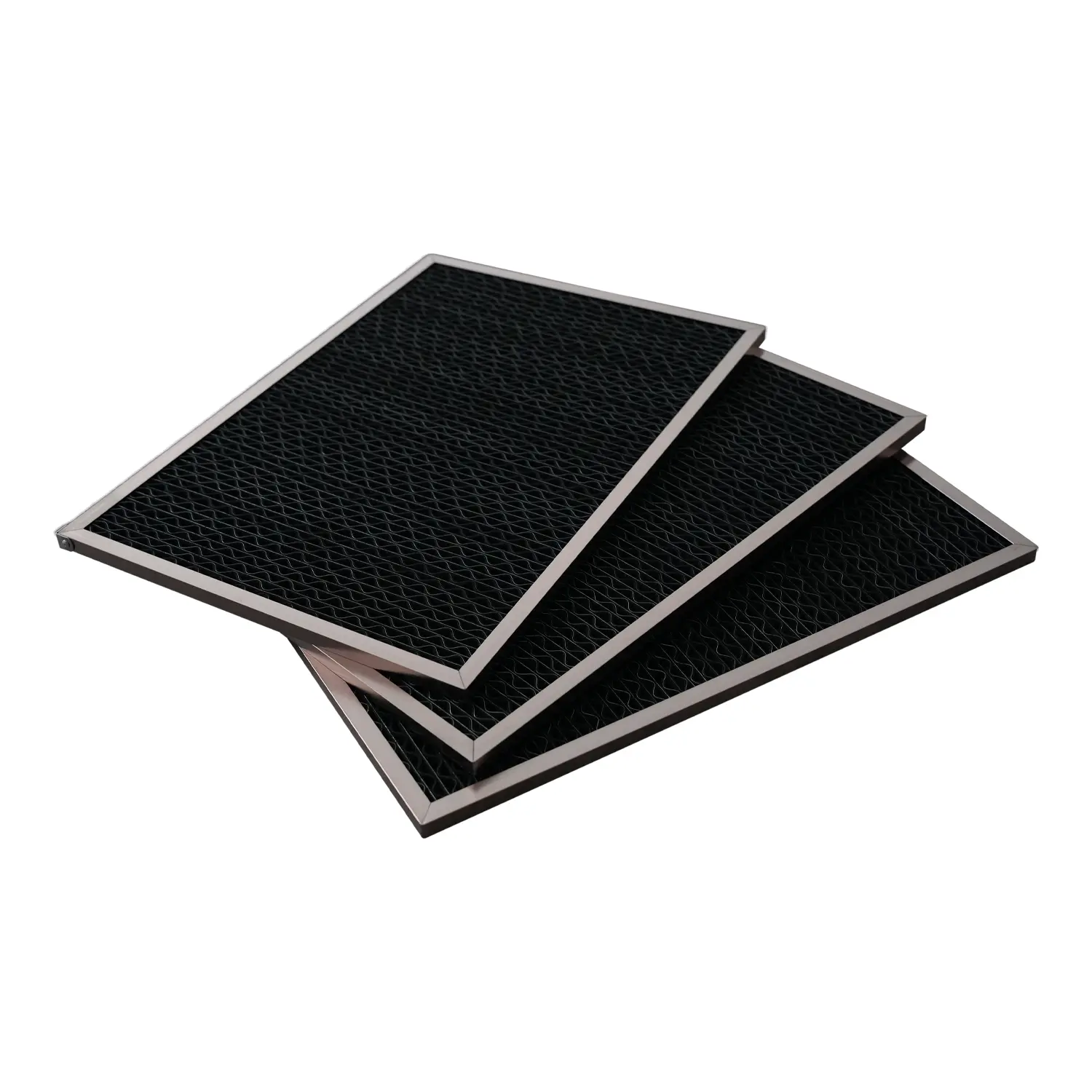
Corrugated ACF filters utilize a three-dimensional honeycomb architecture that fundamentally differs from flat sheet ACF media or loose granular carbon beds. The corrugated structure features parallel channels with wall thicknesses ranging from 0.15 to 0.30 mm, creating a self-supporting framework that maximizes contact surface area while maintaining mechanical integrity under continuous airflow. Individual carbon fibers within the corrugated walls measure 5-20 μm in diameter—approximately 100 times finer than human hair—enabling surface area densities between 1000-3000 m²/g, compared to 500-1200 m²/g for conventional granular activated carbon.
The manufacturing process begins with precursor materials, primarily polyacrylonitrile (PAN) or phenolic resin-based fibers. PAN-based ACF offers superior mechanical strength and uniform pore distribution, making it ideal for high-velocity HVAC applications where structural stability is critical. Phenolic resin variants provide cost advantages for moderate-duty installations. The corrugation geometry—typically configured in 60-degree or 90-degree angles—creates turbulent airflow patterns that enhance mass transfer efficiency, ensuring odor molecules contact active adsorption sites rather than bypassing through preferential flow channels.
This architectural approach delivers 40-60% more effective surface area per unit volume compared to pleated carbon panels, translating directly to extended service life and reduced filter changeout frequency in commercial HVAC systems equipped with Corrugated ACF Filters.
Activation Process and Adsorption Mechanism
The transformation of precursor fibers into high-performance adsorbents occurs through controlled thermal activation. Steam activation at 800-1000°C remains the dominant industrial method, where water vapor reacts with carbon atoms to create microporous structures. This process generates pore size distributions optimized for volatile organic compounds (VOCs) and odor molecules, with 60-80% of total pore volume concentrated in the 0.5-2.0 nm range—precisely matching the molecular dimensions of formaldehyde (0.44 nm), ammonia (0.26 nm), and hydrogen sulfide (0.36 nm).
Chemical activation using phosphoric acid or zinc chloride offers alternative pathways for creating tailored pore structures, though steam activation dominates HVAC applications due to superior environmental profiles and consistent quality control.
The adsorption mechanism operates through two complementary pathways. Physical adsorption (physisorption) dominates for most odor compounds, where Van der Waals forces trap molecules within micropores. The corrugated structure’s high external surface area accelerates this process—adsorption equilibrium occurs within 5-15 minutes versus 30-60 minutes for granular carbon beds. Chemical adsorption (chemisorption) provides secondary capture for reactive species like acidic gases, where surface functional groups form covalent bonds with target molecules.
The fiber morphology creates a “short diffusion path” effect: odor molecules penetrate fiber walls within 0.1-0.5 seconds compared to several minutes required to diffuse into granular carbon pellets. This kinetic advantage proves critical in high-airflow HVAC systems where contact time may be limited to 0.2-0.5 seconds, precisely the operating conditions where Corrugated ACF Filters outperform alternative media.
Performance Specifications and Technical Parameters
Key Filtration Metrics for HVAC Applications
Pressure drop characteristics define the energy efficiency profile of corrugated ACF filters. Initial clean pressure drop typically ranges from 20-80 Pa at rated airflow (0.5 m/s face velocity), increasing to 100-150 Pa at saturation. This compares favorably to granular carbon beds (80-200 Pa initial) and deep-bed scrubbers (150-400 Pa). The corrugated geometry’s open channel design minimizes flow resistance while maintaining turbulent mixing—a critical balance for reducing HVAC fan energy consumption, which can represent 30-40% of total building energy use in commercial facilities.
Adsorption capacity measurements demonstrate a weight-based efficiency of 30-60% for target compounds, meaning 100 kg of ACF media can capture 30-60 kg of contaminants before breakthrough. This capacity varies significantly by molecular weight and polarity: acetone (58 g/mol) achieves 45-55% capacity, while larger molecules like toluene (92 g/mol) reach 50-65%. Relative humidity impacts performance—at >70% RH, capacity for hydrophobic VOCs decreases by 15-25% as water molecules compete for adsorption sites.
Deodorization efficiency exceeds 90% for most organic odors when properly sized, with removal rates >95% common for sulfur compounds and amines in the first 60% of service life. Recommended airflow velocities of 0.3-1.5 m/s ensure adequate contact time; exceeding 2.0 m/s causes breakthrough due to insufficient residence time.
Comparative Performance Analysis
| Parameter | Corrugated ACF | Granular Activated Carbon | Pleated Carbon Panel |
|---|---|---|---|
| Surface Area Efficiency | 1000-3000 m²/g | 500-1200 m²/g | 800-1500 m²/g |
| Pressure Drop (Initial) | 20-80 Pa | 80-200 Pa | 50-120 Pa |
| Typical Lifespan | 12-24 months | 6-12 months | 8-16 months |
| Regeneration Capability | Thermal regeneration is possible (5-8 cycles) | Limited (2-3 cycles) | Not economical |
| Initial Cost ($/CFM) | $8-15 | $4-8 | $6-12 |
| Operating Cost ($/year/1000 CFM) | $180-280 | $320-480 | $240-360 |
The corrugated ACF’s regeneration capability represents a significant lifecycle advantage. Thermal reactivation at 120-150°C for 2-4 hours restores 70-85% of original capacity, enabling 5-8 regeneration cycles before disposal becomes necessary. This extends effective service life to 5-7 years in controlled environments, reducing both material waste and long-term procurement costs for facilities utilizing Corrugated ACF Filters.
Industrial Applications and Use Cases
Healthcare and Laboratory Environments
Medical facilities demand stringent odor control to maintain patient comfort and comply with infection control protocols. Corrugated ACF filters excel in removing formaldehyde emissions from sterilization processes, pathology laboratories, and morgue ventilation systems. Formaldehyde removal efficiency exceeds 92% at concentrations of 0.1-5.0 ppm, well below OSHA’s 0.75 ppm permissible exposure limit.
Pharmaceutical cleanrooms require ISO Class 5-7 environments where chemical vapors from synthesis processes must not contaminate product batches. ACF filters integrated into recirculation loops maintain VOC levels below 50 μg/m³ while preserving HEPA filter integrity—organic vapors can degrade HEPA media adhesives over time. ASHRAE 170-2017 compliance for healthcare ventilation systems specifies minimum outdoor air rates; ACF filtration allows partial recirculation credit by removing gaseous contaminants, reducing energy costs by 20-35% compared to 100% outdoor air systems.
Biohazard odor control in animal research facilities presents unique challenges with ammonia concentrations reaching 25-100 ppm. The corrugated structure’s high surface area enables breakthrough times of 8-12 months at 50 ppm continuous exposure, versus 3-6 months for granular carbon at equivalent media weights.
Food Processing and Commercial Kitchens
Grease vapor adsorption requires filters that resist pore blockage from aerosol particles. Corrugated ACF Filters feature fiber structures that trap grease molecules within micropores while allowing airflow through macropores (>50 nm), maintaining 70-80% of original pressure drop characteristics even after capturing 15-20% weight in lipid compounds. This dual-phase filtration proves essential in commercial kitchen exhaust systems where grease-laden air at 40-80°C challenges traditional carbon media.
Organic acid neutralization in food processing facilities—particularly acetic acid from fermentation and propionic acid from dairy operations—benefits from ACF’s chemisorption capacity. Surface oxygen functional groups react with acidic vapors, achieving >85% removal efficiency at pH-neutral exhaust conditions. Integration with exhaust hoods requires Type I or Type II configurations per NFPA 96; corrugated ACF filters meet UL 1046 standards for grease duct systems when installed downstream of baffle or mesh grease extractors.
NSF/ANSI Standard 2 certification for food equipment materials governs ACF filter applications in direct food contact zones. Carbon fiber media must demonstrate no extractable compounds under steam cleaning conditions (95°C, 30 minutes), a requirement that PAN-based ACF consistently meets while phenolic variants may require protective coatings.
Commercial Buildings and Data Centers
Office building HVAC systems increasingly incorporate ACF filtration to address sick building syndrome complaints linked to VOC emissions from furnishings, carpets, and office equipment. Corrugated filters reduce total VOC (TVOC) levels from 500-2000 μg/m³ (typical for new construction) to <200 μg/m³, meeting WELL Building Standard requirements for enhanced air quality.
Data center applications focus on ozone removal to protect electronic components. Ozone concentrations above 5 ppb accelerate corrosion of copper traces and solder joints; ACF filters maintain <2 ppb through chemisorption on basic surface sites. The low-pressure drop characteristic proves critical in high-density computing environments where cooling represents 30-40% of facility energy consumption—each 25 Pa reduction in filter resistance decreases fan energy by approximately 8%.
LEED v4.1 Indoor Air Quality Credit (EQc2) awards points for demonstrated VOC reduction strategies. Installing Corrugated ACF Filters in makeup air units provides measurable performance data for certification documentation, with continuous monitoring showing sustained removal efficiency across 12-18 month intervals between changeouts.
Installation and Maintenance Requirements
System Integration Guidelines
Mounting configurations must accommodate the corrugated structure’s directional airflow requirements. V-bank arrangements (2-4 filters angled at 22.5-30 degrees) fit standard 24″x24″ or 12″x24″ HVAC openings while increasing effective surface area by 40-60% compared to single flat filters. Box-type housings with side-access panels facilitate changeouts in ceiling-mounted air handling units, reducing maintenance labor time by 30-50% versus disassembling ductwork.
Pre-filtration stages are mandatory to prevent particulate loading that blocks micropores. MERV 8-11 pleated filters upstream of ACF media extend service life by 40-70%, capturing dust, pollen, and fibers before they reach adsorption surfaces. The two-stage approach adds 15-25 Pa to total system pressure drop but reduces annual filter costs by $120-180 per 1000 CFM through extended ACF lifespan.
Bypass prevention requires proper gasket compression and housing design. Neoprene or EPDM gaskets with 25-35% compression ensure <1% leakage rates; silicone gaskets offer superior temperature resistance (up to 200°C) for kitchen exhaust applications. Knife-edge seals on filter frames combined with cam-lock housings achieve <0.5% bypass in critical applications like pharmaceutical cleanrooms.
Service Life and Replacement Indicators
Breakthrough detection methods range from simple olfactory assessment to continuous gas chromatography monitoring. For budgetary applications, a 20% increase in pressure drop signals 60-70% of useful life consumed. Precision installations employ downstream VOC sensors with alarm setpoints at 10-15% of inlet concentration—when outlet readings exceed this threshold, immediate changeout prevents odor complaints.
Typical lifespan calculations account for contaminant load, humidity, and temperature. A commercial office building with 5000 CFM airflow and 500 μg/m³ TVOC inlet concentration consumes approximately 2.5 kg of ACF capacity monthly (assuming 40% average adsorption efficiency). A 50 kg filter bank therefore provides 20 months of service, with replacement costs of $800-1200, including labor.
Disposal regulations classify saturated ACF as non-hazardous waste in most jurisdictions when contaminants are common VOCs. However, filters capturing hazardous air pollutants (HAPs) like benzene or mercury require manifesting under RCRA Subtitle C. Thermal regeneration services charge $3-6 per kg, offering 40-60% cost savings versus disposal and new filter purchase for facilities generating >200 kg annually of saturated media.
Cost-per-CFM analysis reveals total ownership advantages: initial investment of $12/CFM plus $180/year operating costs over 5 years equals $1020/1000 CFM lifecycle cost, compared to $1440/1000 CFM for granular carbon requiring biannual replacement.
Procurement Considerations and Compliance Standards
Regulatory Certifications and Testing Protocols
ISO 10121-1:2014 specifies test methods for assessing general ventilation air cleaning devices for gaseous contaminants. Procurement specifications for Corrugated ACF Filters should require third-party testing demonstrating single-pass efficiency, adsorption capacity, and pressure drop at standard conditions (23°C, 50% RH, 0.5 m/s face velocity). Factory testing documentation must include challenge gas concentrations, breakthrough curves, and statistical process control data from production batches.
UL 900 flammability ratings classify air filter units for fire safety. Corrugated ACF filters typically achieve Class 1 or Class 2 ratings, indicating flame spread indices <25 or <200, respectively. Kitchen exhaust applications require Class 1 certification; general HVAC systems accept Class 2. The carbon activation process inherently reduces flammability compared to raw fiber precursors, though some manufacturers apply fire-retardant coatings for enhanced safety margins.
EUROVENT 4/21 classification provides standardized performance grades from A (highest) to D (lowest) across energy efficiency, filtration performance, and mechanical strength parameters. Specifying Grade A or B ensures filters meet European market expectations for commercial buildings, facilitating procurement for multinational facility portfolios.
Factory testing documentation should verify: (1) iodine number (>1000 mg/g indicates adequate microporosity), (2) methylene blue adsorption (>200 mg/g confirms mesopore development), and (3) ash content (<3% by weight ensures minimal inorganic contamination).
Total Cost of Ownership Analysis
Energy savings from low pressure drop directly impact HVAC operational costs. A 50 Pa reduction versus granular carbon alternatives saves approximately $85 annually per 1000 CFM in electricity costs (assuming $0.12/kWh, 8760 hours/year operation, 65% fan efficiency). Across a 100,000 CFM commercial building, this compounds to $8500/year—offsetting higher initial Corrugated ACF Filters costs within 18-24 months.
Reduced HVAC load extends equipment lifespan by decreasing fan motor duty cycles and bearing wear. Maintenance records from facilities switching to corrugated ACF show 15-25% reductions in fan motor failures over 5-year periods, translating to deferred capital replacement costs of $12,000-18,000 for typical 50 HP supply fan systems.
Labor costs for changeouts favor corrugated ACF’s extended service life. Assuming $85/hour fully burdened maintenance labor and 2 hours per changeout event, biannual granular carbon replacement costs $340/year versus $170/year for annual ACF replacement—a $170 annual savings per filter bank.
ROI calculation framework for B2B buyers:
-
Year 0: Initial investment premium of +$400/1000 CFM versus granular carbon
-
Years 1-5: Annual savings of $255/1000 CFM (energy + labor + reduced HVAC wear)
-
Payback Period: 18.8 months
-
5-Year NPV (at 6% discount rate): +$685/1000 CFM
FAQ
Q1: What is the typical pressure drop increase that indicates filter saturation in Corrugated ACF Filters?
A 15-20% increase in pressure drop from initial clean conditions typically signals that 60-70% of the adsorption capacity has been consumed. For Corrugated ACF Filters with 50 Pa initial pressure drop, saturation indicators appear at 58-60 Pa. However, pressure drop alone is an imperfect metric—breakthrough can occur before a significant pressure increase in low-dust environments. Best practice combines pressure monitoring with time-based replacement schedules derived from contaminant load calculations, or downstream VOC sensor alarms set at 10-15% of inlet concentrations for critical applications.
Q2: Can Corrugated ACF Filters be regenerated, and is it cost-effective for industrial HVAC systems?
Thermal regeneration at 120-150°C for 2-4 hours restores 70-85% of original capacity, enabling 5-8 cycles before disposal. Cost-effectiveness depends on facility scale: operations generating >200 kg annually of saturated media achieve ROI within 12-18 months using in-house regeneration ovens ($8,000-15,000 capital cost). Smaller facilities benefit from third-party regeneration services ($3-6/kg) when filter banks exceed 50 kg total weight. Regeneration proves uneconomical for facilities with <30 kg annual consumption due to logistics and handling costs, making single-use replacement more practical.
Q3: How do Corrugated ACF Filters perform in high-humidity environments compared to granular activated carbon?
At >70% relative humidity, both ACF and granular carbon experience 15-25% capacity reduction for hydrophobic VOCs as water molecules compete for adsorption sites. However, Corrugated ACF Filters demonstrate superior recovery characteristics—when humidity drops below 60%, ACF regains 90-95% of dry capacity within 2-4 hours versus 8-12 hours for granular beds. The fiber structure’s short diffusion paths enable rapid water desorption. For consistent high-humidity applications (>80% RH), specify hydrophobic surface treatments or upstream dehumidification to maintain >85% rated performance. Coastal facilities and tropical climates should calculate capacity at 70% of the manufacturer’s dry-rated specifications for conservative system sizing.
Conclusion
Corrugated ACF filters deliver measurable odor elimination performance through engineered surface area maximization and controlled airflow dynamics. The honeycomb architecture’s 40-60% surface area advantage over conventional media, combined with 20-80 Pa initial pressure drop and 12-24 month service life, establishes a compelling total cost of ownership proposition for B2B procurement managers. For facilities evaluating deodorizing solutions, understanding the interplay between corrugated geometry, adsorption kinetics, and system-specific parameters ensures optimal HVAC air quality outcomes while minimizing lifecycle costs. Proper specification alignment with application requirements—including pre-filtration stages, regeneration capabilities, and compliance with ISO 10121-1, UL 900, and EUROVENT 4/21 standards—remains critical for long-term operational success. The documented energy savings of $85/1000 CFM annually, combined with extended equipment lifespan and reduced maintenance labor, position Corrugated ACF Filters as a strategic investment in indoor air quality infrastructure across healthcare, food processing, and commercial building sectors.